Skip to content
Search
Menu

These go through Viator and earn us a commission. You pay the same as booking direct, and the commission did not choose the list.

Low stone Maya structures with corbelled doorways standing in cleared jungle
David Stanley

Museum

Museo de la Isla de Cozumel

Last updated

The one place on the island that explains why the reef, the endemic animals and the town all ended up the way they did.

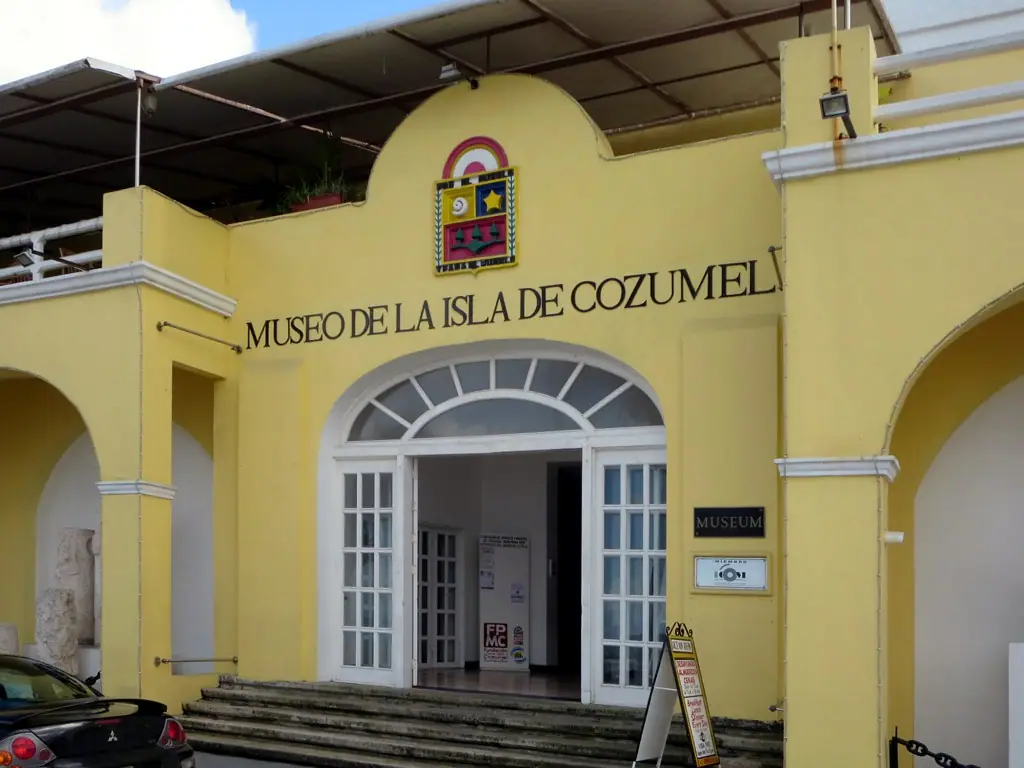
Cozumel is an island people come to for the water, and the museum on the malecón is the only place that bothers to explain the rest of it. It occupies a two-storey building on the seaward side of Avenida Rafael E. Melgar, a few blocks north of the main square, in a structure that began life as one of San Miguel's early hotels. Two floors, a courtyard, a rooftop terrace, and an hour of your day.

The ground floor is natural history, and it is the part that changes how you look at the rest of the island. The reef exhibits explain what the Mesoamerican Barrier Reef actually is and why the channel between Cozumel and the mainland produces the current that makes drift diving here what it is. The island's fauna gets proper treatment, and this matters more than a casual visitor expects: Cozumel has been separated from the Yucatán long enough to evolve its own species. The pygmy raccoon, smaller than a housecat and critically endangered, exists nowhere else on earth. So does the Cozumel emerald, a hummingbird found only here. The Cozumel thrasher has not been reliably recorded in decades and may already be gone.

Upstairs is human history, and it is a stranger story than the brochures suggest. Cozumel was a major pilgrimage destination in the late Postclassic period — women travelled here to the shrines of Ixchel, and San Gervasio was the principal site. After the conquest the island emptied almost completely and stayed effectively uninhabited for centuries. San Miguel as a town dates from 1848, when refugees from the Caste War of Yucatán crossed the channel to escape the fighting on the mainland. Everything since — the chicle boom that shipped chewing-gum latex out of Quintana Roo, the wartime airfield, the arrival of the first divers — is a footnote to that.

Signage runs in Spanish and English. It is a small municipal museum rather than a large one, and it is honest about that. What it does well is answer the questions the reef raises.

Getting there and parking

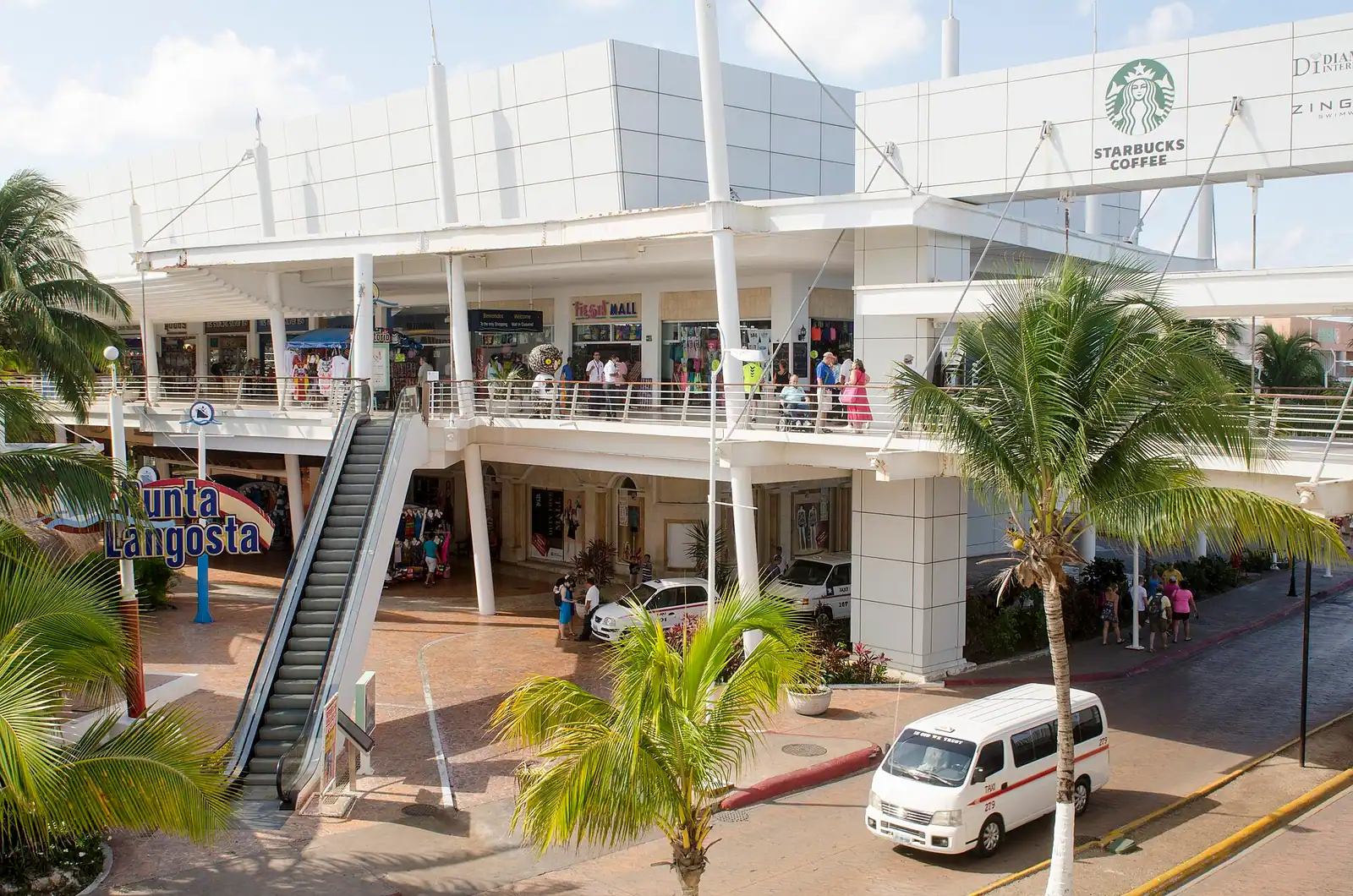
On the seaward side of Avenida Rafael E. Melgar, a few blocks north of the main square and the ferry pier. From the Muelle Fiscal ferry terminal it is a flat walk of under ten minutes along the malecón. From Punta Langosta allow fifteen to twenty minutes on foot, all of it on the promenade.

From Puerta Maya or the International Pier, three miles south, take a taxi from the rank at the terminal and agree the posted zone fare before you get in. Ask to be dropped at the museum rather than "downtown", or you will be left at the square and walking the last part anyway.

Driving, park a few streets inland — the blocks immediately around the square and the ferry terminal are restricted and tight at midday, while street parking two or three streets back is free and usually available.

What is actually in it

Two floors of permanent galleries, arranged so that the natural history comes first and the human history follows, which is the right order for this island.

Downstairs: reef formation and coral biology, the geology of a limestone island with no rivers, and the endemic and near-endemic animals. Dioramas and models rather than aquaria — there are no live fish here, and anyone expecting an aquarium will be disappointed. The value is that it names things you will then recognise underwater, which is a better return on an hour than it sounds.

Upstairs: the Maya period and the Ixchel pilgrimage, the conquest and the long emptying of the island, the 1848 arrival of Caste War refugees, the chicle era, and the twentieth century arrival of diving and then cruise ships. Period photographs of San Miguel before the piers are the quiet highlight.

There is a courtyard with a reconstructed traditional Maya house, temporary exhibition space that genuinely rotates, and a rooftop terrace looking out over the malecón and the channel. The gift shop leans toward books and local craft rather than the duty-free stock sold two blocks south.

The island's own animals

Islands make species. Cozumel has been cut off from the Yucatán peninsula long enough that several of its animals exist here and nowhere else, and this is the single most interesting thing in the building.

  • Pygmy raccoon (Procyon pygmaeus). A dwarf raccoon of the island's mangroves and northern scrub, weighing a fraction of its mainland cousin and listed as critically endangered. Population estimates have run into the low hundreds. It is almost never seen by visitors.
  • Cozumel emerald (Cynanthus forficatus). A hummingbird restricted entirely to the island.
  • Cozumel thrasher (Toxostoma guttatum). Once widespread here, devastated by the hurricanes of the late twentieth century, and not reliably recorded since. It may be extinct.
  • Cozumel coati and Cozumel fox — small endemic or near-endemic mammals whose status is poorly documented.

The museum is blunt about causes: hurricanes on a small island have nowhere to push a population back from, and introduced boa constrictors, feral cats and dogs have done the rest. If you only remember one thing from the ground floor, make it this — it reframes the scrub you drive through on the way to San Gervasio.

Admission, timing and hours

Admission is a modest gate price set in pesos, in the same band as the island's other small municipal attractions — a few hundred pesos or less per adult, with reductions for children. It is charged at the door, and the rate moves. Confirm before you go rather than trusting any published figure, including this one.

Opening is daily on broadly standard museum hours, opening mid-morning and closing in the late afternoon. It is not a late-opening venue, which matters if you are counting on it as a post-beach option. Hours have varied over the years and can shift for public holidays, so check on the day.

Allow forty-five minutes to see it properly and ninety if you read everything. It is the most reliable rainy-hour option in San Miguel: fully indoors apart from the courtyard and the terrace, and a short walk from the ferry pier and the main square.

The rooftop terrace has generally operated as a café. Whether it is serving on any given day has varied, so treat food there as a bonus rather than a plan.
Who should bother, and who should skip it

Worth an hour if you are diving or snorkelling this week and want to know what you are looking at; if you are curious why a Caribbean island has a Mexican town on it and a Maya ruin in the middle; if it is raining; or if you are off a ship at Punta Langosta with time to fill and no appetite for another jewellery shop.

Skip it if you have one short cruise call and the water is the whole point. Six hours is not enough to do a reef trip and a museum properly, and the reef is what you came for. Come back to the museum on a second visit.

With children, it works better than a small municipal museum has any right to — the endemic-animal displays and the reconstructed Maya house land well with roughly seven-and-up. Younger than that and you have bought yourself twenty minutes, not an hour.

For the fuller, glossier, more staged version of Mexican culture, Discover Mexico Park south of town does something entirely different and is the better family choice. This is the serious one.

Tours that visit Island Museum

Operators run these trips past Island Museum, or stop there as part of a longer route. We list what the booking data supports — not everything that mentions the name.

These go through Viator and earn us a commission. You pay the same as booking direct, and the commission did not choose the list.

Shared departurespriced per seat, best value for one or two

Private and small-group optionsoften cheaper per head for a family or a group of six

Near Island Museum

Straight-line distances, so allow more on the road — the island is long and has one main parkway.

  • A cruise ship berthed alongside a pier with a low waterfront town spreading behind it
    Free

    Landmark

    The Cozumel Malecón

    A seafront promenade that belongs to the cruise crowd until five and to San Miguel every evening after that.

    1–3 hoursFree. Walking the malecón and the main square costs nothing at any time of day.0.3 mi away

  • A small waterfront town seen from the water, with a seafront promenade and low buildings behind it
    Free

    Neighbourhood

    San Miguel de Cozumel

    The island's only town, where the price of the same beer halves somewhere between the waterfront and Avenida 30.

    1–4 hoursFree. The malecón, the main square and the waterfront cost nothing to walk.0.5 mi away

  • A cruise ship berthed alongside a town waterfront with low buildings and a seafront avenue
    Free

    Marina

    Punta Langosta Cruise Pier

    The one Cozumel berth where you walk off the ship into an actual town rather than a purpose-built shopping village.

    0.5–2 hoursFree to walk off and walk around. The pier is not a ticketed attraction, and the town beyond it costs nothing to enter.0.6 mi away

  • A stepped stone pyramid with a broad staircase standing in cleared ground under a bright sky

    Entertainment

    Discover Mexico Park

    Mexico's landmarks shrunk to knee height, ten minutes from the piers — the lowest-risk two hours on a short cruise day.

    1.5–2.5 hoursPaid admission per adult with a reduced child rate; tequila and chocolate tastings are generally included, purchases are not.3.7 mi away

Island Museum: common questions

Is the Museo de la Isla de Cozumel worth visiting?

If you are on the island for more than a cruise call, yes. It is a small municipal museum rather than a major one, but it is the only place that explains the reef you are about to dive, the endemic animals found nowhere else on earth, and why a Caribbean island has a Mexican town founded by Caste War refugees in 1848. An hour here makes the rest of the island legible. On a single six-hour cruise day, the reef is the better use of your time.

How much does the Cozumel island museum cost?

A modest admission set in pesos, in the same band as the island's other small municipal attractions, with reductions for children. The rate is charged at the door and has been revised more than once, so confirm it when you arrive rather than budgeting from a published figure. Carry pesos — card acceptance at small venues on the island is inconsistent, and paying in US dollars costs you on the exchange rate.

What animals are only found on Cozumel?

Several, and the museum's ground floor is built around them. The pygmy raccoon is a dwarf raccoon found only here and listed as critically endangered, with population estimates in the low hundreds. The Cozumel emerald is a hummingbird restricted to the island. The Cozumel thrasher, once common, has not been reliably recorded in decades and may be extinct. Hurricanes on a small island and introduced predators are the main causes.

How long do you need at the Museo de la Isla de Cozumel?

Forty-five minutes covers both floors at a reasonable pace. Ninety minutes if you read the panels properly and spend time in the courtyard and on the rooftop terrace. It is genuinely small, so anyone budgeting half a day will be finished early. With children under about seven, plan for twenty minutes of real attention and treat the reconstructed Maya house as the hook.

Is the Cozumel museum a good rainy day option?

It is the best one in San Miguel. Both floors are fully indoors, it sits directly on the malecón within a short flat walk of the ferry pier and the main square, and it pairs easily with lunch a few blocks inland when the rain settles in. Cozumel's rain tends to arrive as short heavy afternoon storms rather than all-day grey, so an hour here often outlasts the weather.