Skip to content
Search
Menu

These go through Viator and earn us a commission. You pay the same as booking direct, and the commission did not choose the list.

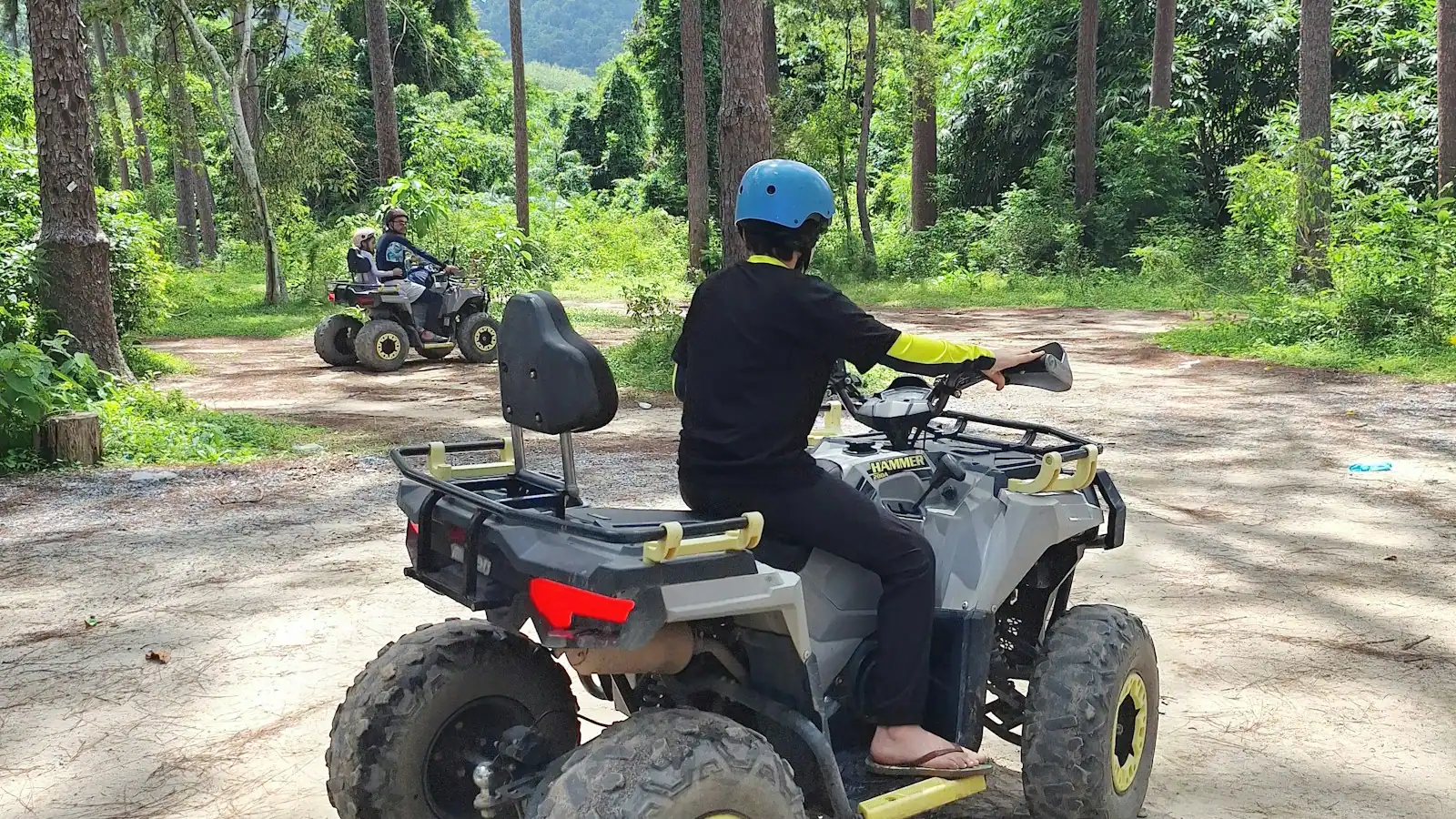
A rider in a blue helmet driving a quad bike along a sandy track through forest

Tours

Cozumel ATV and Dune Buggy Tours

Last updated

Cozumel ATV and buggy tours on the island's inland jungle tracks. Age and licence rules, what a ride costs, dust and mud seasons, and who should skip it.

Start with the thing the listings never say: Cozumel is flat. The whole island is a slab of uplifted limestone whose highest ground is a rise of perhaps fifteen metres, and there is not a hill on it worth the name. If you are picturing switchbacks and mountain overlooks, that is a different destination. What Cozumel has instead is a middle third covered in low, dense secondary jungle on broken karst, threaded with private ranch tracks that the ATV operators have cleared and maintained. The riding is about surface, not elevation: white dust, exposed limestone, ruts, puddles that turn out to be deeper than they look, and a canopy that closes over the track.

That turns out to be plenty. Most operators run their tracks off the Transversal, the cross-island road, which puts them fifteen to twenty-five minutes from either the cruise piers or the town. A typical tour is three to four hours door to door and folds in two other things: a swim in one of the island's small private caverns, which are limestone chambers with cool, still, startlingly clear water rather than the big open cenotes of the mainland, and a stop at a beach club or snorkel spot on the leeward side to wash the dust off.

The dust deserves its own paragraph, because it decides what you wear. Cozumel's dry stretch runs roughly February to May, and in those months a convoy of quads raises a white limestone cloud that gets into hair, ears, phone ports and every fold of clothing. Ride at the front if you can. After rain, from about June through October, the same tracks turn to red-brown mud and the ride becomes messier and considerably more fun. Either way, do not wear anything you would be sad to see ruined, and take a buff or bandana.

The rules are stricter here than most people expect, and operators enforce them because their insurance depends on it. You must have your physical driving licence with you to drive — a photo on a phone will not do. Minimum driving age is usually sixteen or eighteen depending on the operator. Passengers are generally accepted from six to eight years old, often with a height minimum around four feet. Closed-toe shoes are mandatory and sandals are refused at the gate. Weight limits of around a hundred and ten kilos per person are common. Check the specific numbers against your group before you book, not when you arrive.

One last honest note. ATVs and buggies are not for driving to the beach on public roads here — the tours run on private land and you are transferred to the trailhead by van. And a great many travel insurance policies exclude quad biking by default. Five minutes reading your policy now is cheaper than the alternative.
Our picks

The ones we would book

  • Editor's Pick

    Best all-round jungle ride

    Why we chose it

    A three to four hour tour that pairs the inland track with a cavern swim and a rinse-off on the leeward coast, so you do not finish the day covered in limestone dust with nowhere to wash. Look for operators who publish their group size and run a sweep rider at the back of the convoy as well as a lead.

  • Best for Families

    Best buggy tour for families

    Why we chose it

    A side-by-side with belts, a roll cage and room for a bag solves the two things that go wrong with families on quads: a small passenger with nothing to hold, and nowhere to put the towels. Check the operator's passenger minimum, usually six to eight years plus a height requirement, against your youngest before booking.

    Jade Caverns
    Best for FamiliesFree cancellationInstant confirmation

    Low Last Minute Supplier Cancellation Rate

    Jade Caverns and Mayan Village Cozumel ATV TOUR (opens in a new tab)

    1.2K reviews

    Ride your own single or double ATV in the company of your guide to go off-roading through astonishing trails in the jungle and Mayan…

    3–4 hours

    Prices checked

    from $75.05Usually $79

What a Cozumel ATV tour is actually like

You are picked up at the pier gate or your hotel and driven to a ranch entrance off the Transversal. There is a waiver, a safety briefing, a helmet, and a short practice loop in a clearing where the guides watch to see who can actually operate a throttle.

Then the convoy sets off, single file, with a lead guide and usually a sweep rider at the back. Speeds are modest and deliberately so: the tracks are limestone with exposed rock edges and the guides ride them every day. Expect frequent stops, partly for photographs and partly to regroup, because somebody always falls behind.

The jungle here is not rainforest. It is low, dry, dense tropical forest, hammered flat by Hurricane Wilma in 2005 and grown back thick, so the canopy is close over the track and the visibility off it is about four metres. You will see iguanas, possibly a coati, and a great many butterflies. Birdlife is good but you are making too much noise to see much of it.

The cavern stop is usually the highlight for people who were not expecting it. Cozumel's caverns are small compared with the mainland's cenotes — you climb down a wooden stair into a limestone chamber, the water is cool and clear, and the whole thing takes twenty minutes. Life jackets are standard.

Most tours finish with a rinse and a beach or snorkel stop on the leeward coast, which is where the day resets from dusty to pleasant. Budget for a tip for the guides; it is customary and they earn it.

What ATV and buggy tours cost here

What it costs

Bands, and worth verifying at the time of booking. Cozumel's median tour price sits around ninety dollars and this category clusters close to it.

  • Shared ATV tour, three to four hours: roughly $80 to $130 per driver, usually including transfers, helmet, the cavern stop and often a beach or snorkel leg.
  • Second rider on a tandem: commonly $30 to $60 less than the driver rate, sometimes free on promotions.
  • Side-by-side buggy: typically priced per vehicle in the $140 to $220 range for two to four people, which is frequently the cheapest per head for a family.
  • Combination tours pairing quads with snorkelling or a beach club: usually $110 to $170.
  • Private groups: from around $400 for a small family unit with a dedicated guide.

Things that are extra more often than not: a fuel surcharge at some operators, the beach club food and drinks if the stop is not all-inclusive, GoPro footage or photographs from the guide, and tips. If a marine park snorkel is attached, the small per-person park fee may also be collected separately in cash.

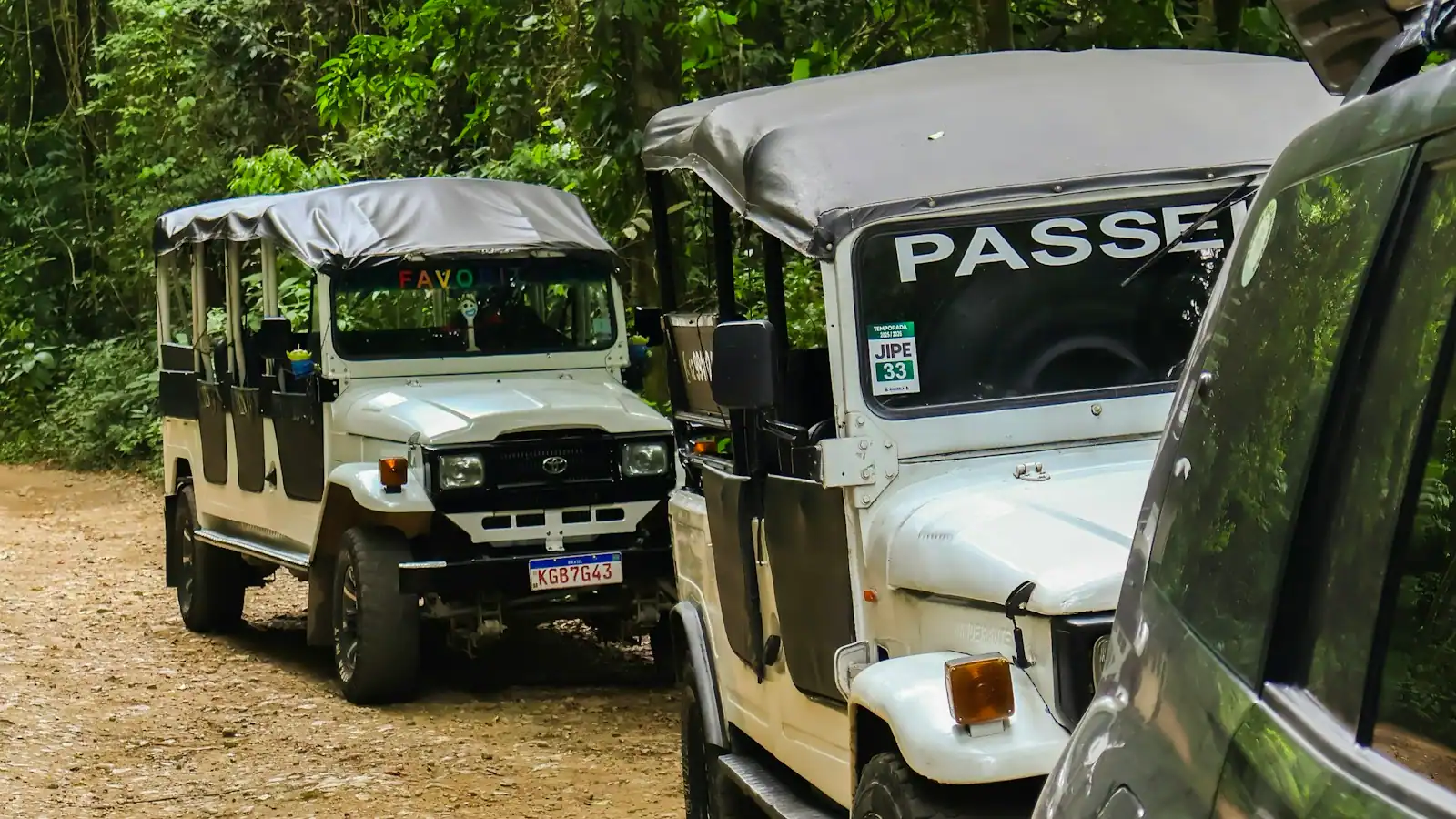
One comparison worth making before you book. A guided jeep convoy covering the whole island loop with lunch tends to cost about the same as a three-hour quad tour. They are different days, not interchangeable ones: the ATV buys you an activity, the jeep buys you the island. If you only have room for one and you have never seen Cozumel's east coast, take the jeep.

Best time of day, and how the seasons change the ride

When to go

Morning is the better slot for almost everyone. It is cooler, the track is less chewed up, the dust is settled by the overnight humidity, and in the wet season you are riding before the afternoon convection builds.

Allow three and a half to four and a half hours door to door for a three-hour advertised tour once the transfer, waiver, briefing and rinse-off are counted. That fits comfortably inside a normal cruise call, which is why this category sells so well at the piers. Book the first departure and you are back with hours in hand.

February to May is dust season. Dry, bright, and the convoy behind the lead rider eats limestone powder. Buff, sunglasses, and a phone in a zip bag.

June to October is mud season. Afternoon storms arrive fast, the tracks hold water and the puddles are deeper than they read. Many riders think this is the better version. It is certainly the dirtier one, and a rain jacket is pointless — you will be wet either way.

November to March brings the nortes, the northerly winds that push down the channel and can shut small boats and ferries. Land activities are the natural fallback on those days, and ATV operators tend to be busiest exactly when the water tours cancel. Book ahead if a norte is forecast.

Whatever the month, the sun at twenty degrees north is not negotiable. Cozumel's UV is strong through cloud and you are in an open vehicle with no shade for three hours.

Who this suits, and who should choose something else

Well suited: teenagers and adults who want an active hour or two, families with children old enough for a buggy, mixed groups where half the party dives and the other half does not, and cruise passengers who want something more physical than a beach club inside a four-hour window.

Divers should mind the order of operations. If you are diving Cozumel's reefs on the same trip, do the quad day before your last dive or on a surface day, not squeezed between two dives. And if you are flying home, keep the usual surface interval discipline; a bumpy inland ride does not change the rule about diving and altitude.

Not well suited: anyone with a back, neck or shoulder problem, anyone pregnant, and anyone who dislikes being dirty. The tracks are hard limestone and the vehicles have unforgiving suspension, and operators are within their rights to refuse riders on medical grounds.

Small children. Passenger minimums are usually six to eight with a height requirement, and even then a tandem quad is a long time for a small child to hold on. A buggy with belts is the right call, or a different activity altogether.

Anyone hoping to ride on the roads. The tours use private tracks and van transfers. You cannot hire a quad and ride the coastal highway to a beach club, and scooters are the vehicle people use for that instead — with their own considerable risks on a road shared with taxis and tour buses.

Anyone expecting dramatic terrain. Say it again: the island is flat. The pleasure here is the jungle track, the cavern and the dirt, not the view.

Book it

Everything else we track

We could not find tours matching this right now

Nothing came back for Cozumel ATV. Operators add and retire experiences constantly, so this list changes week to week. Try a broader category, or come back in a day or two.

ATV, tandem or buggy: choosing the vehicle

How they compare

The vehicle matters more than the operator on this one.

Single ATVTandem ATVSide-by-side buggy
Seats12, one behind the other2 to 4, side by side, with a roll cage and belts
Who it suitsConfident riders who want to driveA couple, or a parent with an older childFamilies, nervous drivers, anyone who wants to talk
ComfortMost exposed, most physicalRear passenger holds on the whole waySeats, belts, a roof and somewhere to put a bag
DustWorstWorstBetter, but still significant
PriceLowest per driverBest value for twoHighest per vehicle, often cheapest per head at four

Two practical points that decide it for most groups. First, on a tandem ATV the rear passenger has no controls, nothing to hold but the driver and no view past their shoulders; children under about ten often dislike it. A buggy solves that completely. Second, buggies have somewhere to stow a bag, which on a dusty track is worth more than it sounds.

If anyone in the party has a bad back, a recent shoulder injury or a neck problem, take the buggy or skip the category. The tracks are corrugated limestone and a quad transmits every centimetre of it.

Cozumel also has combination products that pair an hour on a quad with snorkelling, a beach club or a jeep leg. On a short port call those save a transfer and are usually the better buy than two separate bookings.

What to wear and bring

What to bring

Assume everything you take will be dusty, muddy or both by the end.

  • Your physical driving licence. Non-negotiable for drivers at every operator on the island.
  • Closed-toe shoes. Trainers you do not love. Sandals, flip-flops and open-heeled shoes are refused at the gate.
  • Clothes you can write off. Long shorts or light trousers, an old T-shirt, and something with sleeves if you burn.
  • A buff, bandana or neck gaiter. The single most useful item in dust season.
  • Sunglasses rather than contact lenses if you have the choice. Limestone dust and contacts are a bad combination.
  • Swimwear under your clothes and a towel, for the cavern and the beach stop.
  • Reef-safe sunscreen without oxybenzone, applied before the helmet goes on. If there is a snorkel leg, operators may ask you to rinse conventional sunscreen off.
  • Insect repellent for the jungle stops, especially after rain.
  • Pesos in small notes for tips, drinks and the beach stop.
  • A zip bag or dry bag for your phone. Dust in a charging port is a real way to end a holiday's photography.

Leave behind: anything loose in your pockets, jewellery, and a good camera unless you have a proper case for it. Helmets are provided; bringing your own is fine and some regular riders do.

The rules, the waiver and the insurance gap

Before you book

Quad biking is the activity most likely to generate a serious injury on an otherwise gentle island holiday, and the risk sits almost entirely in a few predictable places.

Rollovers on turns. Almost every incident on these tracks is a rider taking a bend too fast and putting a wheel off the packed surface into soft limestone. Stay in the convoy's tracks. The guides ride at the speed they do for a reason.

Spacing. In dust season riders close up because they cannot see, which is exactly backwards. Drop back until you can see the track.

Alcohol. Operators will refuse anyone who has been drinking, and should. A morning tour before a beach club is fine. The reverse is not.

Check your travel insurance. Quad biking, ATV use and off-road activity are excluded as standard by a large number of policies, and some exclude them even as a passenger. If yours does, an add-on usually costs very little. Medical care in Cozumel is decent but private, and serious cases are transferred to the mainland.

Read the waiver you sign. Operators typically accept no liability for damage to the vehicle, and a rollover can generate a bill. Ask what the damage liability is before you ride, not after.

Sun and dehydration do more quiet harm than the riding. Three hours in an open vehicle at this latitude needs more water than you will be offered.

Finally, helmets are provided and should be worn properly fastened for the whole ride, including the slow sections. Most head injuries on tracks like these happen at walking pace.

On the ground

Where to go

Every place below has its own page — hours, parking, what it costs and what to expect when you get there.

  • Coconut palms leaning over a quiet curve of pale sand beside flat clear water

    Beach

    Playa Palancar

    Real palm shade, no DJ, and a ten-minute boat ride to Palancar Gardens and the El Cielo sandbar.

    3–7 hoursA modest day pass covering a lounger and umbrella; food, drink, boat trips and rentals are charged separately.

  • Heavy surf breaking on an empty, steep windward beach under a bright sky
    Free

    Beach

    Punta Morena

    Open Caribbean, no reef in front of it, no lifeguard on the coast — and the best two hours on the island if you are staying the night.

    1–3 hoursFree. The beach is open shoreline; you pay only for what you eat and drink.

  • Snorkellers above a shallow coral shelf close to a rocky shoreline in clear water

    Park

    Chankanaab Park

    The one Cozumel gate that buys reef you can swim to from the sand, a lagoon, a garden and a beach, ten minutes from the piers.

    3–7 hoursPaid park, charged per person at the gate with a lower child rate. All-inclusive food and drink packages and the animal programmes are priced separately on top.

  • Children swimming and playing around inflatable floats in shallow sheltered water

    Beach

    Paradise Beach Cozumel

    The club where you can pay almost nothing to get in — as long as you were going to eat and drink anyway.

    3–7 hoursChoose your route: entry fee plus a per-person minimum spend, a separate Fun Pass wristband for the water toys, or an all-inclusive food-and-drink package.

  • Low stone Maya structures with corbelled doorways standing in cleared tropical forest

    Historic site

    San Gervasio Archaeological Site

    The island's principal Maya site: a sanctuary of Ixchel that drew women across the channel by canoe for six hundred years.

    1–2 hoursPaid archaeological site operated by INAH, charged per person in pesos, usually cash. Guides are extra and charged per group.

  • A single small pre-Hispanic stone structure standing under a protective roof on open grass
    Free

    Historic site

    El Cedral

    Cozumel's oldest settlement, where a single small Maya building shares a square with a church founded by refugees in 1848.

    0.5–1 hoursFree to walk into the village and look at the Maya structure and the church.

Straight answers

Questions people actually ask

How much are ATV tours in Cozumel?

A shared three to four hour ATV tour generally runs about $80 to $130 per driver, including transfers, helmet and usually a cavern or beach stop. A second rider on a tandem is typically $30 to $60 cheaper. Side-by-side buggies are often priced per vehicle at roughly $140 to $220 for two to four people, which usually works out cheapest per head for a family. Confirm current pricing when you book.

Do you need a driving licence for an ATV tour in Cozumel?

To drive, yes, and you must have the physical licence with you. Operators check it at the trailhead and a photo on your phone is not accepted. Minimum driving age is usually sixteen or eighteen depending on the company, and riders under eighteen normally have to be accompanied by a parent. Passengers do not need a licence but are subject to the operator's age and height minimums.

What is the minimum age for ATV tours in Cozumel?

It varies by operator, so check before booking. Drivers are generally sixteen with a valid licence, or eighteen at the stricter companies. Passengers are commonly accepted from six to eight years old, often with a height minimum of about four feet. Weight limits of around a hundred and ten kilos per person are also standard. These are insurance conditions rather than guidelines, and they are enforced at the gate.

What should you wear on a Cozumel ATV tour?

Closed-toe shoes, which are mandatory and checked, plus clothes you are willing to ruin. A buff or bandana for the dust, sunglasses rather than contact lenses if you have the option, and swimwear underneath for the cavern and beach stops. Add reef-safe sunscreen before the helmet goes on. In the dry months from February to May the limestone dust gets into everything; from June to October you are riding in mud instead.

Is an ATV tour in Cozumel worth it if you have limited time?

On a cruise call, yes, if you take a morning departure. Three to four hours door to door fits comfortably inside a normal port day with slack to spare. The honest caveat is that Cozumel is flat, so the appeal is the jungle track, the cavern and the dirt rather than scenery. If it is your first visit and you have never seen the east coast, a jeep loop shows you more of the island for a similar price.

Are ATV tours covered by travel insurance?

Often not. Quad biking and off-road activity are excluded as standard by many policies, sometimes even for passengers. Check your wording before you book and buy an activity add-on if you need one, because they are usually inexpensive. Also read the operator's waiver: most accept no responsibility for damage to the vehicle, so ask what a rollover would cost you before you sign.

Can you rent an ATV in Cozumel and drive it yourself?

Not in the way people imagine. The tours run on private ranch tracks and you are transferred there by van, so there is no riding a quad along the coastal highway to a beach club. For independent island transport the usual choices are a rental car or jeep, a scooter, or taxis. Scooters are cheap and popular, but they share a road with taxis, buses and tour traffic, which is its own conversation.