Skip to content
Search
Menu

These go through Viator and earn us a commission. You pay the same as booking direct, and the commission did not choose the list.

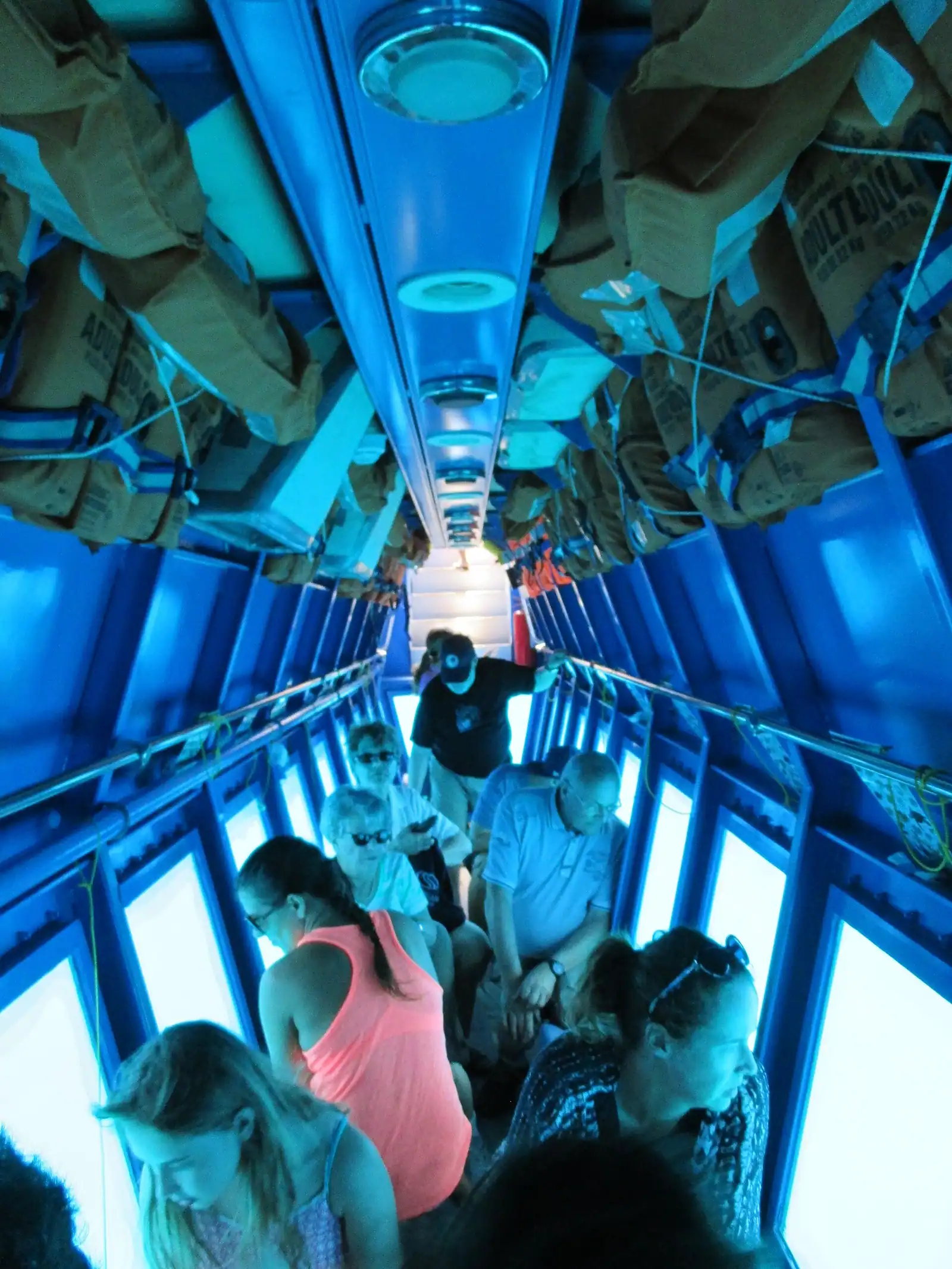
Passengers seated along the cabin of a tourist submarine, each at a round porthole looking out into blue water
User:Mattes

Tours

Cozumel Submarine Tours

Last updated

A real Cozumel submarine descends about 100 feet on the reef. How it differs from semi-subs and glass-bottom boats, prices, and who it actually suits.

Cozumel is one of a small number of places in the world where a tourist can get into an actual submarine, sit down in an air-conditioned cabin, and descend to roughly a hundred feet on a living coral reef. The vessel is a passenger submersible certified for the job, it carries a few dozen people at a time, and it dives on the reef near Chankanaab on the sheltered west coast. Nobody gets wet, nobody needs to swim, and nobody needs to be able to clear their ears.

That last point is the whole reason this category exists on an island otherwise dominated by diving and snorkelling. Cozumel's reef is the headline attraction, and there are a lot of visitors who cannot reach it any other way: people who do not swim, people with mobility limitations, grandparents on a family cruise, children who will not tolerate a mask, anyone recovering from surgery or ear trouble. For those readers the submarine is not a novelty. It is the only route to the thing they came to see.

Here is the confusion the listings create, and it is worth clearing up before you spend money. A submarine submerges. A semi-submarine does not. The semi-subs, sometimes sold as "sub-see explorers" or "underwater viewing boats", have a viewing gallery below the waterline where you sit and look out through windows at the reef in fifteen or twenty feet of water, while the hull stays on the surface. They are considerably cheaper, they are genuinely enjoyable, and they are not submarines. Glass-bottom boats are a third thing again: a surface boat with a window in the floor. All three get sold with overlapping language.

Which you want depends on what you are buying. If the point is the experience of descending and watching the light change and the wall fall away beneath you, only the real submarine does that. If the point is seeing fish and coral without getting in the water, a semi-sub delivers most of it for a fraction of the price, and at fifteen feet the colours are actually better, because red light disappears from water long before you reach a hundred feet.

For cruise passengers this is one of the easiest bookings on the island: the whole thing takes about two hours door to door, it runs regardless of whether you feel like swimming, and it is close enough to the piers that it slots either side of a beach afternoon.
Our picks

The ones we would book

  • Editor's Pick

    Best real submarine dive

    Why we chose it

    The genuine submersible, descending to roughly a hundred feet on the reef near Chankanaab with a seat at a porthole and about forty minutes submerged. It is the only way, short of certifying as a diver, to watch Cozumel's wall fall away into deep water. Confirm the child height minimum and ask about the boarding ladder if it matters.

What a Cozumel submarine dive is actually like

The trip starts on land, not in the sub. You check in at an office near the waterfront, get a short safety briefing, and then take a surface boat out to where the submarine is waiting — the sub does not come alongside a dock for boarding.

Transferring is the one physically demanding moment of the whole excursion: you step from a moving tender onto the submarine's deck and then climb down a vertical ladder through the hatch. Crew help, and it is not difficult for most people, but it is a ladder, and anyone with serious mobility or balance limitations should raise it with the operator before booking rather than at the hatch.

Inside, the cabin is air-conditioned, lit, and lined with individual portholes with a seat at each one. You face outward. There is a pilot and a narrator who talks through what is passing.

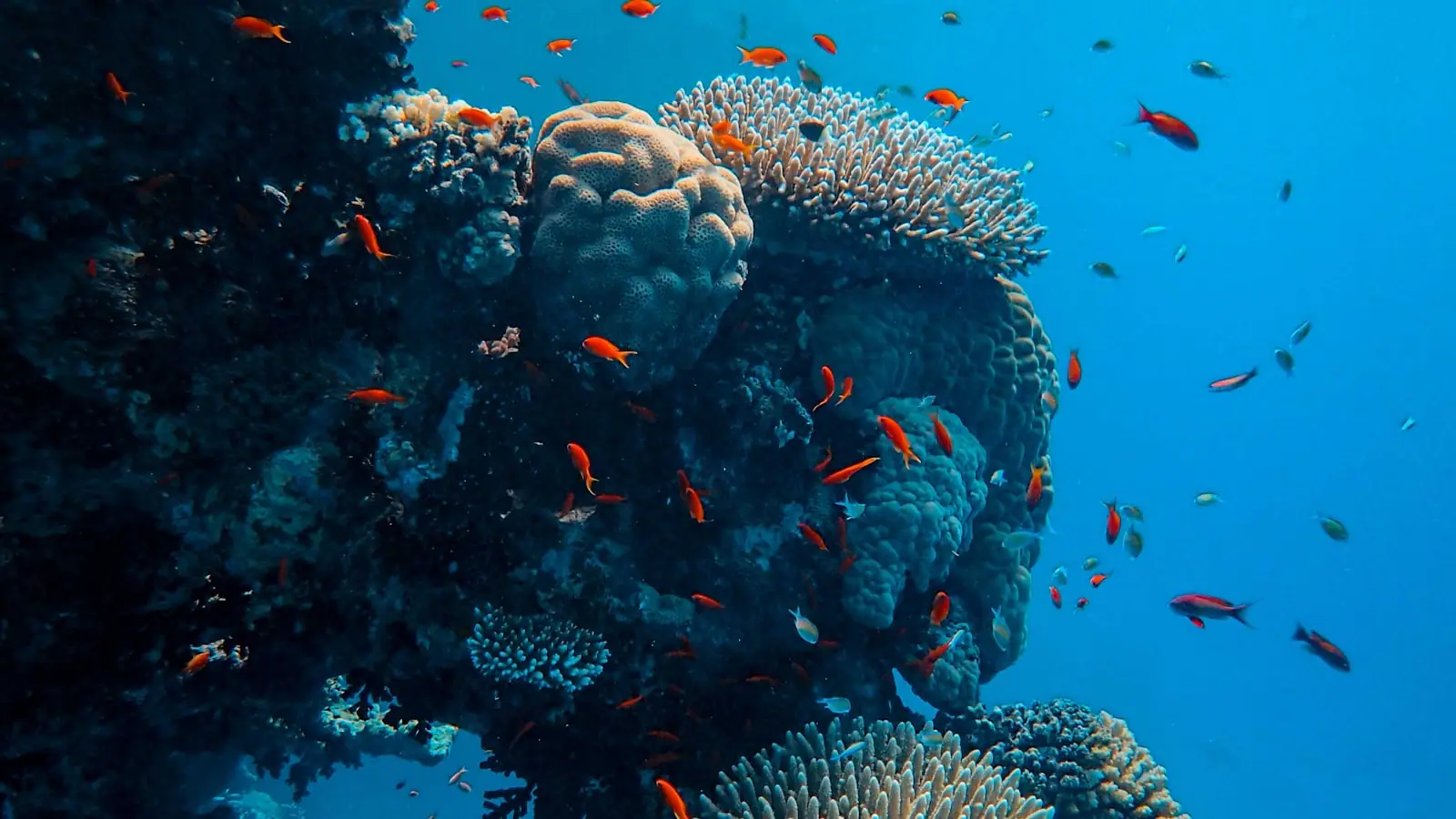
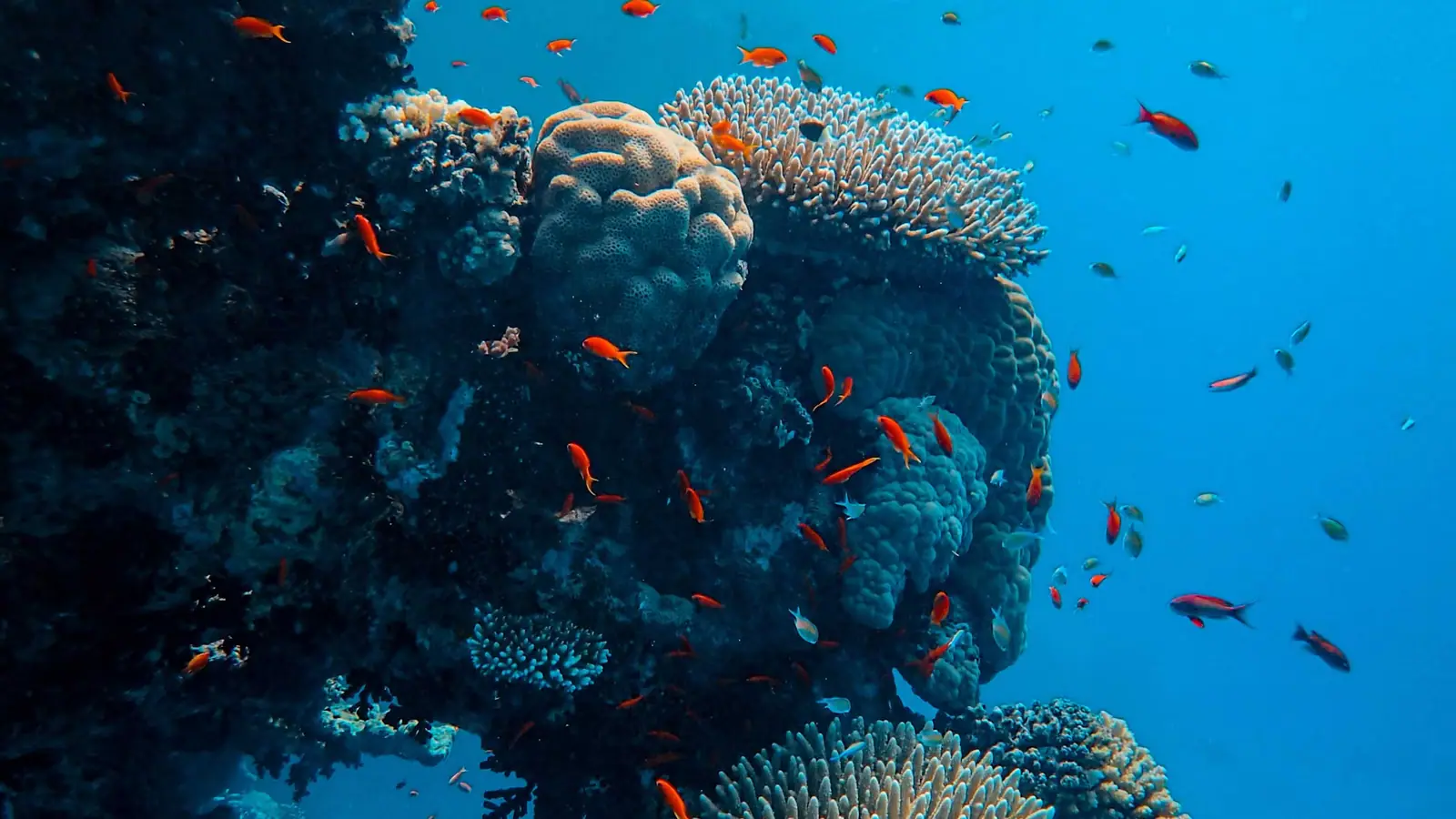
The descent is the part people remember. The water goes from turquoise to blue to something closer to indigo, the surface light stops arriving, and the reef wall builds beside the windows. At depth the sub cruises slowly along the reef, and the narrator points out barrel sponges, sea fans, schooling fish, sometimes turtles or rays, and the occasional dive group going past in the other direction, which is a strange and excellent thing to watch from inside a submarine.

Submerged time is around forty minutes of a roughly two-hour total. Expect the colours to be muted — at a hundred feet everything reads blue and grey, because red and orange wavelengths are absorbed long before that depth. Divers see it the same way. The scale and the structure are what you are there for, not the colour.

What submarine tours cost in Cozumel

What it costs

Bands, as always — verify current pricing before you book.

  • Passenger submarine, roughly two hours: commonly around $95 to $130 per adult, with lower child rates. Combo packages that add a beach club afternoon sit higher.
  • Semi-submarine or underwater viewing boat: typically $30 to $60 per person.
  • Glass-bottom boat: generally $25 to $50 per person.

There is usually a separate per-person park or dock fee collected on the day, often in the region of $10 to $15, and it is not always mentioned in the listing price. Ask when you book and carry pesos.

Compared with the rest of the island's water inventory, the submarine is expensive per hour. A half-day snorkel trip to Palancar and El Cielo costs less and puts you in the water for longer. That comparison is only relevant if getting in the water was ever an option for you. For a non-swimmer, the submarine is not competing with snorkelling; it is competing with not seeing the reef at all, and on those terms it is good value.

Booking through your cruise ship costs more than booking direct or through a platform, and buys you the ship's schedule protection. Given how short this excursion is, the schedule risk is genuinely small, which makes independent booking more defensible here than for a full-day trip.

Children: operators typically set a minimum height or age for the submarine, often in the region of a metre tall. Confirm before paying; it is a common reason a family gets turned away at check-in.

How long it takes and when to go

When to go

Budget two hours door to door for the submarine, plus the taxi each way. That is the shortest headline activity on the island that still shows you the reef, and it is the reason it fits awkward cruise calls where a four-hour catamaran does not.

Departures run through the day on a fixed schedule, so the practical constraint is availability rather than conditions. Morning slots have marginally better light reaching depth; the difference is not large, because at a hundred feet the light is heavily filtered whatever the time.

Rain does not stop it. This is the most weather-proof water activity in Cozumel, which makes it a genuinely useful answer on a grey day when the catamarans have cancelled and the beach clubs are miserable. High wind can still cancel the tender transfer, so it is not entirely immune.

Cruise passengers: the short duration is the selling point. It fits a late arrival, a short call, or the gap between a morning beach club and all-aboard. Even so, give the operator your ship name and all-aboard time, and leave an hour of margin. The taxi queue back to the piers on a four-ship day is the risk, not the submarine.

Overnight visitors should treat this as a rainy-afternoon or a with-grandparents booking rather than a headline day. If you can snorkel, snorkel. Then, if someone in the party cannot, book the sub and go together.

Peak demand follows the ships. Days with several vessels in port fill the schedule early, so book ahead in high season rather than turning up.

Who submarine tours genuinely suit

Non-swimmers and nervous swimmers. The clearest case. Cozumel's entire reputation is underwater, and this is the route to it that requires nothing of you but sitting down.

Visitors with mobility limitations, with the important caveat of the ladder. Once you are in the cabin, there is a seat at every porthole and nothing else to negotiate. Ring the operator first and describe the limitation honestly.

Grandparents on a multi-generation cruise. This is the activity where an eighty-year-old and a nine-year-old have the same good time, which is not true of a drift dive or a party catamaran.

Anyone with ear problems, recovering from surgery, or pregnant, for whom diving and even hard snorkelling are off the table. The cabin stays at surface pressure, so there is nothing to equalise.

People who want to see a wall. Divers aside, this is the only way to watch Cozumel's reef drop into deep water. It is a genuinely different perspective from the surface.

Children, with two caveats: check the minimum height requirement before booking, and be honest about whether a forty-minute sit in a confined space is going to work for your particular five-year-old. For many children a glass-bottom boat is the better value and the better hour.

Skip it if you are a competent swimmer who will happily snorkel. The same money buys a half-day trip to Palancar and El Cielo with an hour in the water, and you will see more colour at fifteen feet than the sub sees at a hundred.

Book it

Everything else we track

We could not find tours matching this right now

Nothing came back for Cozumel submarine. Operators add and retire experiences constantly, so this list changes week to week. Try a broader category, or come back in a day or two.

Real submarine, semi-submarine or glass-bottom boat

How they compare

Three products, overlapping marketing, very different prices.

Passenger submarineSemi-submarineGlass-bottom boat
Does it submerge?Yes, to around 100 ftNo, hull stays on the surfaceNo
Where you sitSealed cabin below the waterViewing gallery below the waterlineOn deck, looking down through a panel
Typical priceRoughly $95 to $130 adultRoughly $30 to $60Roughly $25 to $50
Depth of what you seeReef wall and deeper structureReef in 10 to 25 ftReef in 10 to 20 ft
ColourMuted; blues and greys at depthBright; red light still presentBright
DurationAbout 2 hours total, ~40 min submerged60 to 90 minutes45 to 90 minutes
BoardingTender transfer plus a vertical ladderStep aboard at a dockStep aboard at a dock
Best forThe experience of going downSeeing reef life cheaply and easilyChildren, short attention spans, tight budgets

The honest summary: the semi-submarine shows you more colourful reef for less money with easier boarding. The submarine shows you depth, scale and a wall dropping away into blue, which no surface vessel can. They are not substitutes for each other, and the one you want depends on which of those two sentences describes what you were imagining.

If you are booking for someone with a mobility limitation, ask about the ladder specifically. It is the deciding factor far more often than the price is.

What to bring

What to bring

  • A light layer. The cabin is air-conditioned and people come off it cold, especially after a wet tender ride.
  • Pesos in cash for the separate dock or park fee and the taxi both ways.
  • Your camera, with the flash turned off. Flash bounces straight back off the porthole acrylic and ruins every shot. Press the lens close to the glass and shoot on a high ISO instead.
  • Booking confirmation and photo ID, and the child's height if there is a minimum.
  • Motion sickness tablets if you are prone. The submerged portion is extremely stable, but the surface tender ride out and back is not, and that is where people get queasy.
  • Your ship's all-aboard time written down.

Leave behind: large bags, which will not fit in the cabin, and any expectation of bright coral colours at depth. Physics, not the operator.

Claustrophobia, the ladder and the small print

Before you book

You cannot leave early. Once the hatch is closed and the sub is descending, the trip runs to its schedule. If anyone in your group is genuinely claustrophobic, this is the wrong booking, and finding out at ninety feet is a bad way to learn. The cabin is lit, air-conditioned and lined with windows, which helps most people, but "most people" is not everyone.

The boarding ladder is the real accessibility question. It is a vertical ladder through a hatch, from a tender that is moving with the swell. Crew assist, and plenty of older visitors manage it comfortably, but nobody should assume. Call the operator, describe the limitation, and get a straight answer before you pay.

Height and age minimums are enforced. Families do get turned away at check-in over a child a few centimetres short. Confirm the threshold when booking.

The extra fee is real. A separate per-person dock or park charge, often around $10 to $15, is typically collected on the day and is frequently absent from the advertised price. Carry cash.

Colour at depth is muted, and that is not a fault. Red and orange wavelengths are absorbed in the first ten to twenty metres of water. At a hundred feet everything reads blue and grey. If you were expecting the reef photographs you have seen online, those were taken in shallow water with artificial light.

Check the cancellation terms. High wind can stop the tender transfer even though the submarine itself is unaffected, and a weather cancellation on a cruise day leaves you with a few hours and no plan. Have a fallback.

On the ground

Where to go

Every place below has its own page — hours, parking, what it costs and what to expect when you get there.

  • Snorkellers above a shallow coral shelf close to a rocky shoreline in clear water

    Park

    Chankanaab Park

    The one Cozumel gate that buys reef you can swim to from the sand, a lagoon, a garden and a beach, ten minutes from the piers.

    3–7 hoursPaid park, charged per person at the gate with a lower child rate. All-inclusive food and drink packages and the animal programmes are priced separately on top.

  • A low coral ridge with sponges and sea fans in shallow, brightly lit water

    Water feature

    Paradise Reef

    Thirty to fifty feet of easy reef a few minutes south of the cruise piers, and the best night dive on the island.

    2–4 hoursNot free in practice: boat access, plus the per-person daily national park fee charged to everyone entering the park by boat.

  • A cruise ship berthed alongside a pier with a low waterfront town spreading behind it
    Free

    Landmark

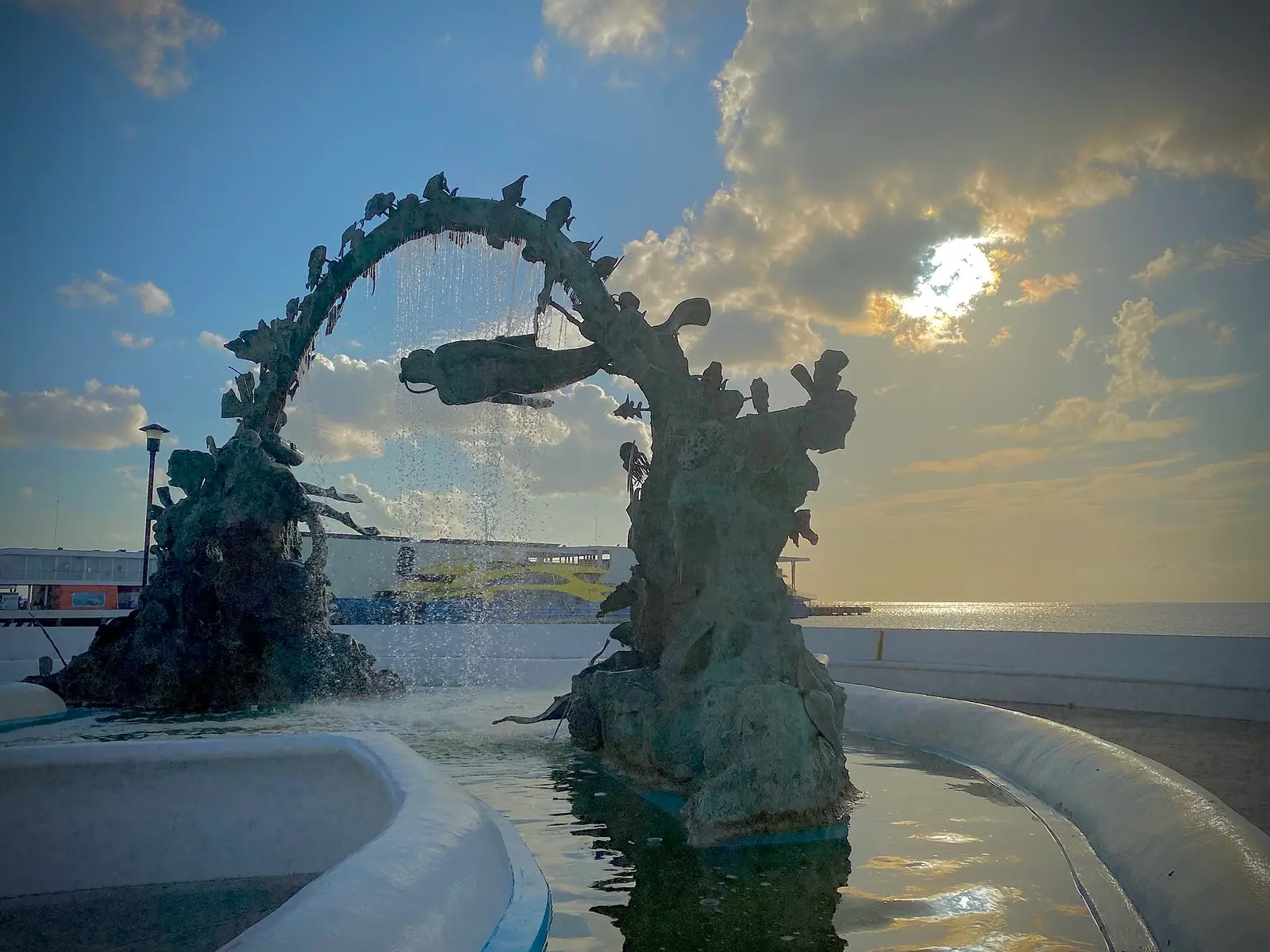
    The Cozumel Malecón

    A seafront promenade that belongs to the cruise crowd until five and to San Miguel every evening after that.

    1–3 hoursFree. Walking the malecón and the main square costs nothing at any time of day.

  • A cruise ship berthed alongside a town waterfront with low buildings and a seafront avenue
    Free

    Marina

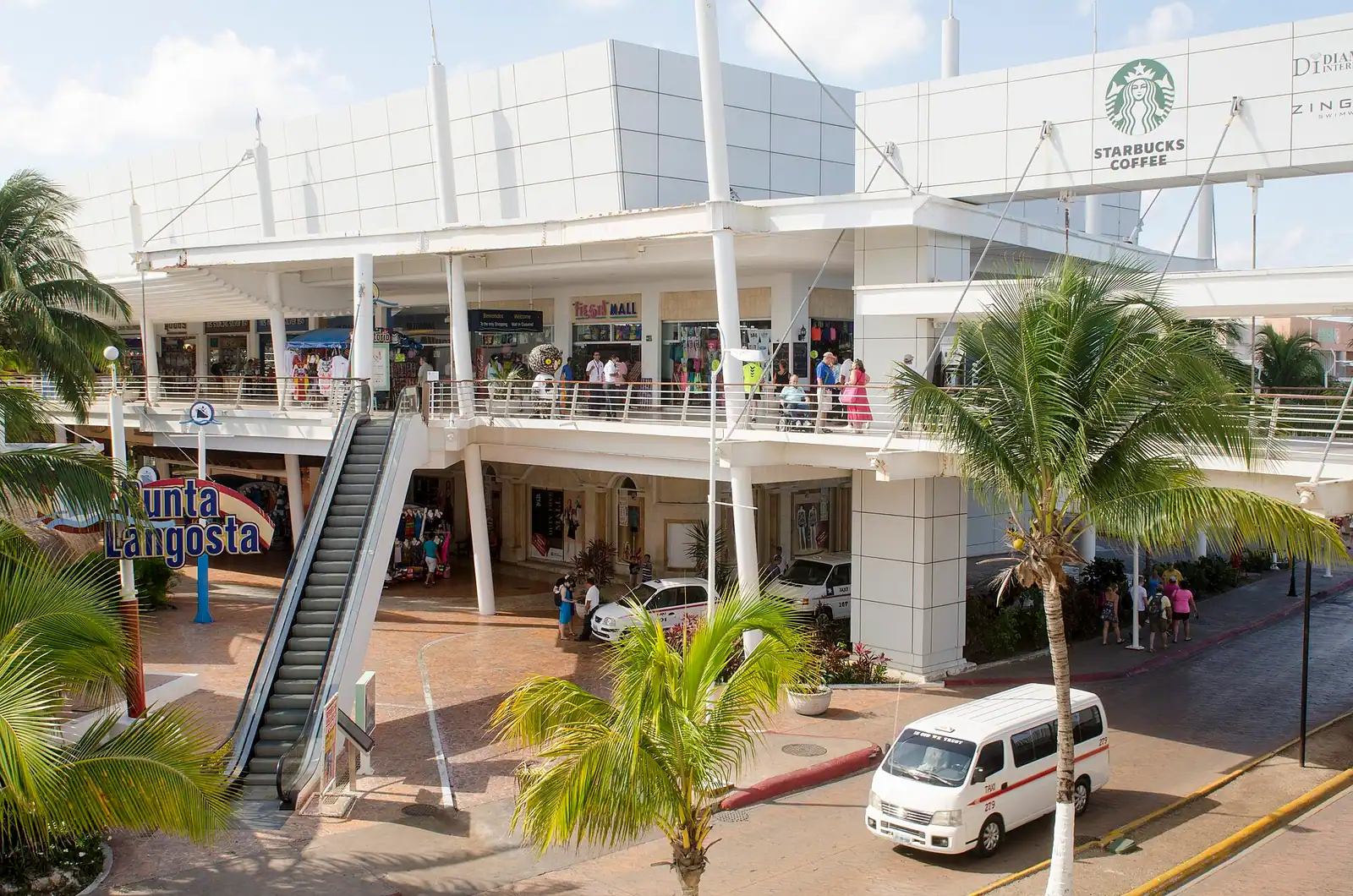
    Punta Langosta Cruise Pier

    The one Cozumel berth where you walk off the ship into an actual town rather than a purpose-built shopping village.

    0.5–2 hoursFree to walk off and walk around. The pier is not a ticketed attraction, and the town beyond it costs nothing to enter.

Straight answers

Questions people actually ask

Is there a real submarine in Cozumel?

Yes. Cozumel has a genuine passenger submersible that dives to roughly a hundred feet on the reef near Chankanaab, carrying a few dozen people in an air-conditioned cabin with a seat at every porthole. It is not a semi-submarine or a glass-bottom boat, both of which are also sold locally with similar wording and stay on the surface. The submerged portion runs around forty minutes of a two-hour trip.

How much does the Cozumel submarine tour cost?

The passenger submarine generally runs around $95 to $130 per adult for a trip of about two hours, with lower child rates and higher combo packages that add a beach club. A separate per-person dock or park fee, often in the region of $10 to $15, is usually collected on the day and is frequently missing from the advertised price. Semi-submarines and glass-bottom boats cost considerably less.

What is the difference between a submarine and a semi-submarine?

A submarine submerges; a semi-submarine does not. On a semi-sub you sit in a viewing gallery below the waterline while the hull stays on the surface, looking at reef in roughly ten to twenty-five feet of water. It costs perhaps a third as much, boarding is a step rather than a ladder, and the colours are actually brighter, because red light is absorbed long before a hundred feet. What it cannot show you is depth.

Is the Cozumel submarine good for people who cannot swim?

It is the clearest use case for it. Nobody enters the water, the cabin stays at surface pressure so there is nothing to equalise, and no swimming ability is required. The single physical demand is boarding: a tender transfer followed by a vertical ladder down through the hatch. Crew assist, but anyone with balance or mobility limitations should describe them to the operator before booking rather than at the hatch.

Can children go on the Cozumel submarine?

Usually yes, but operators set a minimum height or age, often in the region of a metre tall, and it is enforced at check-in. Confirm the exact threshold when you book. The other question is temperament: the submerged portion is about forty minutes seated in a confined cabin, which suits some children and not others. For younger kids a glass-bottom boat is often the better hour and much cheaper.

What will you actually see from a submarine in Cozumel?

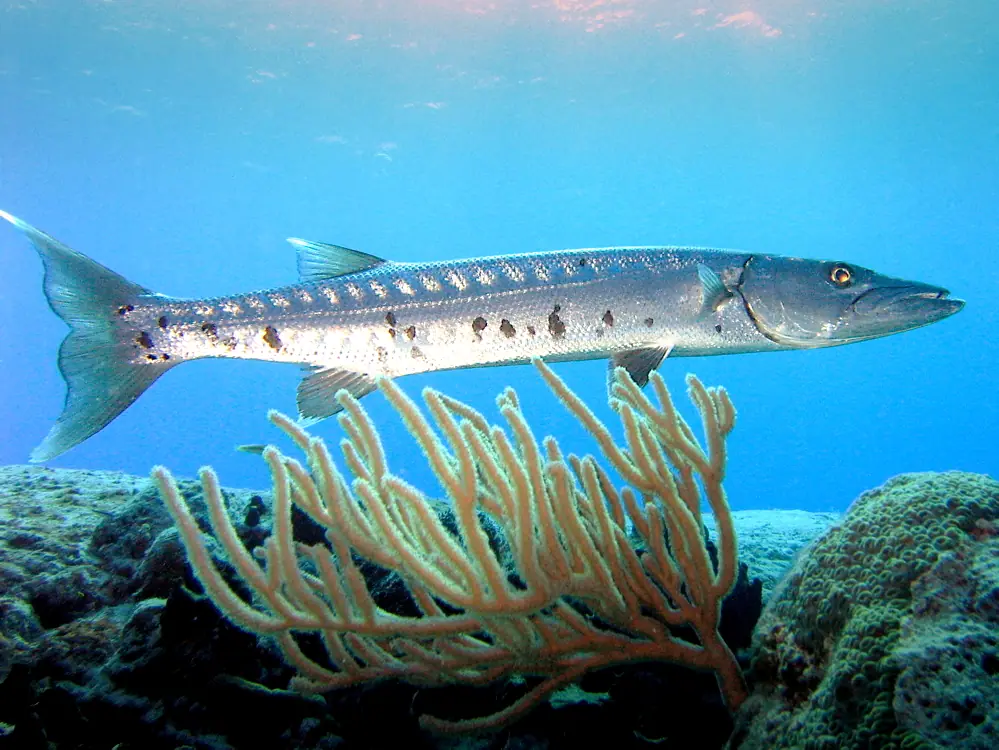
Reef wall, coral heads, barrel sponges and sea fans, schooling fish, and often turtles, rays or a passing group of scuba divers. What you will not see is bright colour. Red and orange wavelengths are absorbed in the first ten to twenty metres of water, so at a hundred feet the reef reads blue and grey. The draw is scale and depth, not the palette from the brochure photographs.

Does the Cozumel submarine run in bad weather?

It is the most weather-proof water activity on the island, because rain makes no difference once you are submerged, which is why it is a good answer on a grey day when the catamarans have cancelled. It is not completely immune: strong wind can stop the surface tender transfer out to the submarine. Check the cancellation and refund terms before booking, particularly if you are on a cruise call with no fallback plan.