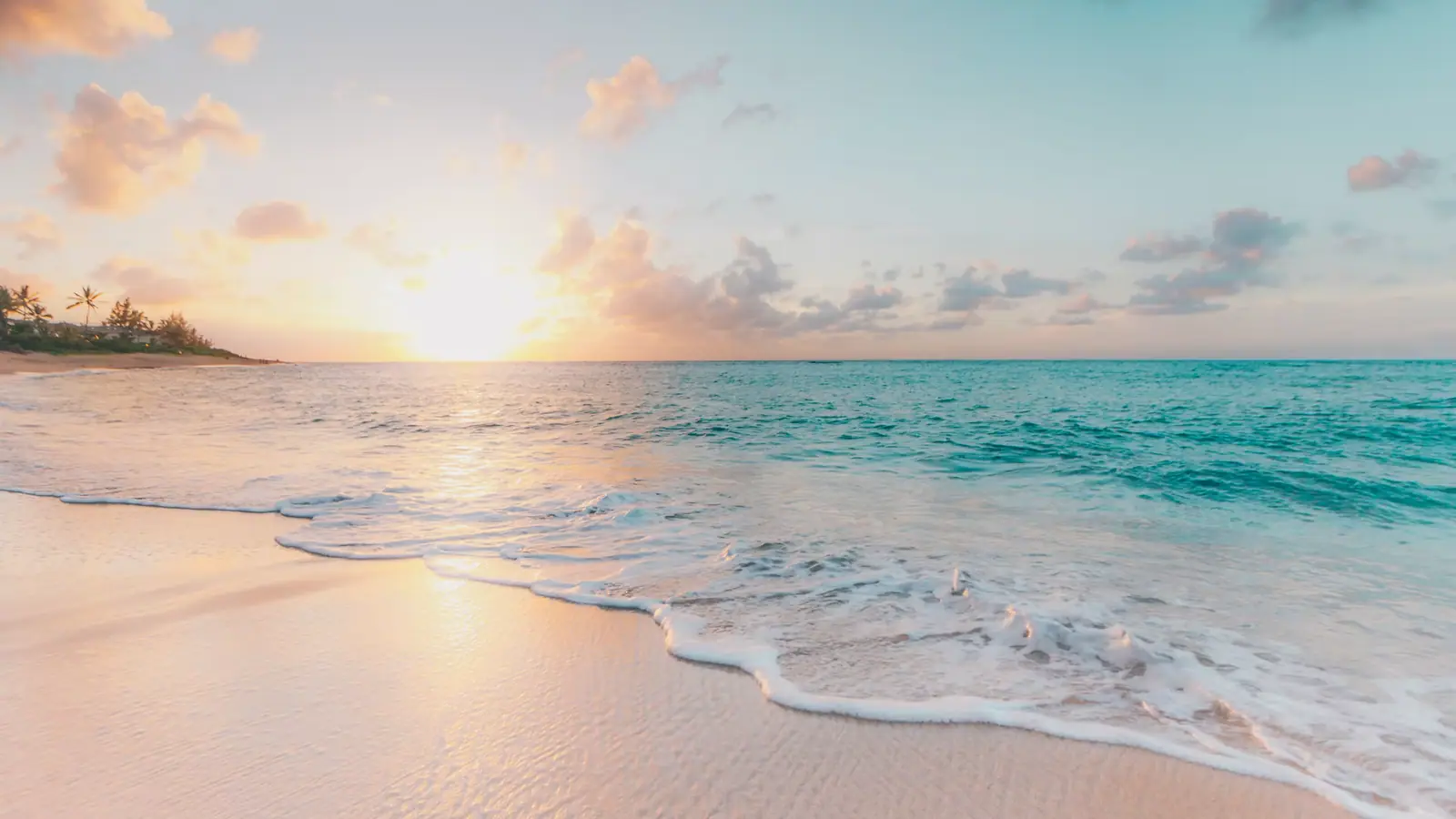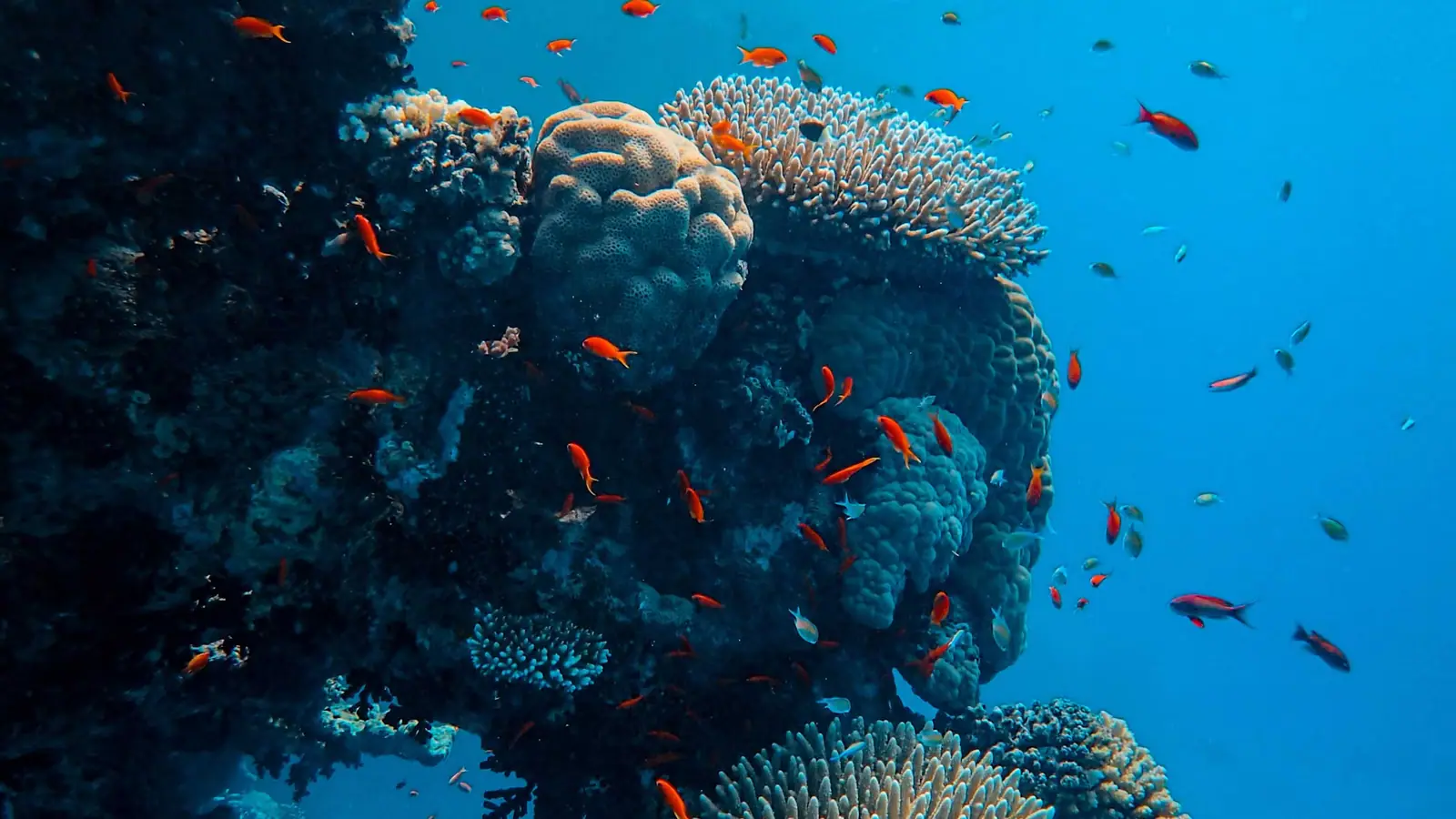
Cozumel is unusually generous to snorkellers, for one structural reason: the reef here is not a distant offshore feature. The drop-off runs close to the leeward shore, the water on top of it is clear to eighty feet and beyond, and several of the coral formations that divers come for top out at twenty or thirty feet — shallow enough to look down on from the surface and see everything.
What the island does not give you is easy access to all of it. The two best snorkel experiences here, Palancar and El Cielo, are both boat-only. Everything you can walk into is a step down from them, though a decent step and cheaper by an order of magnitude.
The boat sites
Palancar
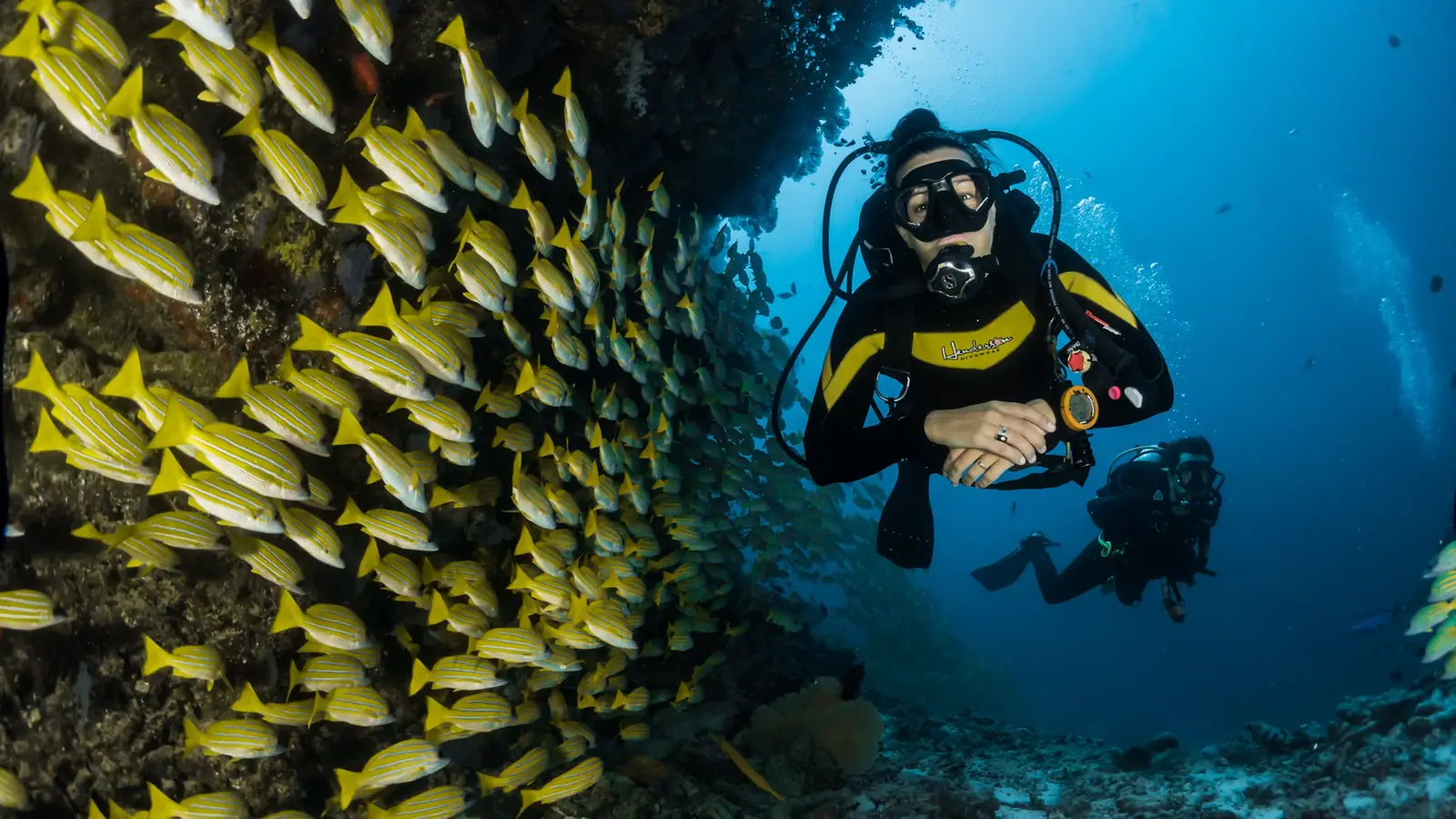
The one to do if you do only one. A long run of coral heads, canyons and sand chutes in roughly twenty to forty feet, which means you are looking down onto structure rather than swimming through it. Snorkel boats work the shallow shoulder while the dive boats drop over the edge below you, and on a clear morning you can watch both. The scale is the point: these are not coral patches, they are formations the size of buildings, and no shore reef on the island comes close.
El Cielo
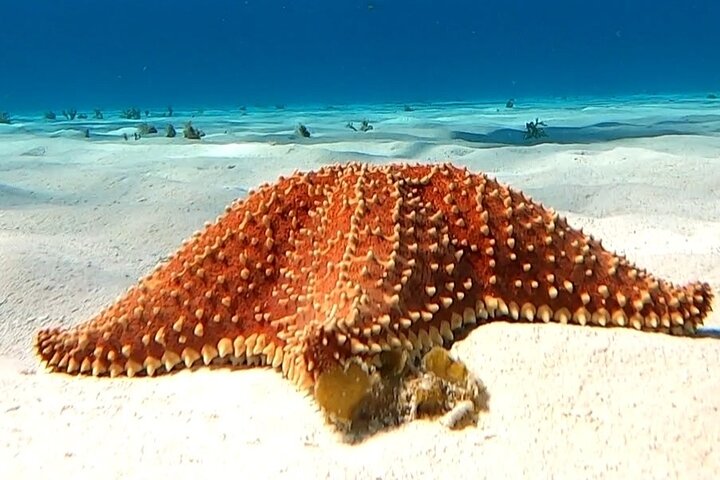
A shallow sand flat off the southwest tip, reachable only by boat, in water so clear the bottom looks half as deep as it is. The draw is the cushion starfish resting on the sand in three to six feet. It is not a coral site. It is a floating and standing-in-the-shallows site, and it is almost always the last stop of a half-day trip because the boats raft up and the bar opens.
One rule, and it is not negotiable. Do not lift the starfish out of the water. They breathe through water, and taking one out for a photograph suffocates it. Repeated handling kills them slowly, which is why local operators have become blunt about it and why a guide who offers to pose one for you is telling you what kind of operation you are on.
Columbia Shallows
Next door to Palancar and gentler — coral gardens in shallower water, often calmer, and the standard second stop when the sea at Palancar is livelier than the brochure photograph.
Paradise Reef
Close to the International Pier and shallow enough at thirty feet or so that snorkel boats use the top of it. Convenient rather than spectacular, and genuinely useful on a short cruise call.
The shore sites
These you reach by taxi, walk into off steps or sand, and leave whenever you like.
Dzul-Ha, in front of the Money Bar, is the best shore snorkel on the island for most people. Steps into the water, reef within metres, minimal current on a normal day, and somewhere to sit afterwards. Entry is generally free; you pay for loungers and for what you eat.
Sky Reef is purpose-built for shore entry further down the west coast, with a modest entry fee that typically includes a chair, and gear packages if you did not bring your own.
Playa Corona is small, cheap and local, with reef directly offshore. A good second stop on a jeep day heading south.
Chankanaab buys you a sheltered lagoon, ladder entries, facilities and the least intimidating water on the island behind a park gate fee. It is the right answer for families and nervous swimmers and the wrong answer if you want wild reef.
Playa Palancar, the beach rather than the reef, has shallows worth a mask and is where some boat trips launch from.
| Site | Access | Best for | Watch out for |
|---|---|---|---|
| Palancar | Boat only | The headline coral formations | Book a 9am departure; midday is crowded |
| El Cielo | Boat only | Starfish, clear shallow water | Do not touch or lift the starfish |
| Columbia Shallows | Boat only | Calmer alternative to Palancar | Usually a second stop, shorter in the water |
| Paradise Reef | Boat, near the piers | Short cruise calls | Boat traffic; stay with your group |
| Dzul-Ha (Money Bar) | Shore, steps | Best free shore reef | Rocky entry; reef shoes help |
| Sky Reef | Shore, small fee | Easy entry, gear available | Limited shade at midday |
| Playa Corona | Shore, small fee | Cheap, quiet, local | Small site, little infrastructure |
| Chankanaab | Park gate fee | Families, nervous swimmers | Least wild water on the island |
The hour matters more than the site
Morning wins here, consistently and for physical reasons rather than crowd ones. The west coast is calmest before the afternoon breeze fills in. The light angles into the water rather than glaring off it. And the moorings at Palancar are not yet stacked with catamarans — a 9 a.m. departure typically has the first stop to itself.
Late afternoon is the shore window. Dzul-Ha and Playa Corona empty out after about four, the light goes gold and the reef fish come back out. If you are staying on the island rather than passing through, that hour is the one nobody on a ship can have.
The current, for snorkellers
Everything you have read about Cozumel's drift applies to you too, at a smaller scale. The current runs north along the leeward shore, which means swimming out from the beach club is easy and swimming back is not. This is the single most common way snorkellers get into difficulty here.
Two habits fix it. Swim against the current first, so the tired leg is the easy one. And on a boat trip, do what the guide does: let the water carry you, stay with the group, and do not try to fight back to a coral head you have already passed. The boat is following you.
The park fee and the rest of the honesty
The marine park fee applies to snorkellers as well as divers inside park boundaries. It is a per-person daily charge, it is usually not in the advertised trip price, and it is a legal requirement rather than an upsell. Ask when you book.
Standing on coral kills it. So does kicking it with a fin, which is what happens when people snorkel in a vertical position over shallow reef. Float flat, keep your fins behind you, and do not stand up unless you are over sand.
Sargassum: Cozumel's west shore sits in the island's own lee and gets far less seaweed than the mainland Riviera Maya, which is a genuinely useful comparative fact when you are choosing between the two. It is not a guarantee — a strong onshore wind can push weed onto the west coast for a few days, and the east coast collects the island's share year-round. If it matters, look at recent photographs from the specific beach club rather than a seasonal forecast, and remember that boat trips to Palancar and El Cielo are unaffected by whatever is on the sand.
Bring your own mask
A mask that fits you is the highest-value thing in your suitcase. Rental masks are the single biggest cause of a bad snorkel, and spending forty minutes over Palancar clearing water is a waste of the one trip you will probably take out there. Fit test: hold it to your face without the strap and breathe in through your nose. If it stays, it fits.
If you wear glasses, a cheap prescription mask changes the day entirely. Palancar's scale only works if you can see it.
A long-sleeved rash guard rather than more sunscreen. The UV between eleven and three is severe, the water is clear enough that your back burns while you are floating face-down, and a rash vest solves the problem without putting anything in the water.
Reef shoes for the shore sites. Dzul-Ha and Playa Corona have rocky entries and there are urchins in the rubble at both.
A float vest if anyone in the party is a weak swimmer. Most boat operators carry them, but they carry a finite number and on a full catamaran they go first. Ask when you book rather than at the swim platform.
Cruise day or island stay
On a cruise day, default to a boat if the call is long enough. A four-hour catamaran to Palancar and El Cielo is comfortably the highest-value use of six to eight hours ashore, and the departure piers are close enough that a 9 a.m. start and a 2 p.m. return leaves a genuine margin against all-aboard. Confirm the return-to-dock time, not the trip length.
If your ship arrives late, or you have young children, or the sea is up, take the shore option instead. Dzul-Ha or a beach club lets you leave the moment you want to, and the taxi back to the piers is a short fixed-fare run rather than a boat schedule you do not control.
If you are staying, do both, and separate them. A morning boat trip for the headline reefs. Then a second, slower afternoon walking into the water at Dzul-Ha with your own mask, which costs a taxi fare and whatever you spend at the bar.
The thing overnight visitors get that nobody on a ship does is the early slot. Before about nine, the west coast is glass, the reef is undisturbed and the boats are still loading. That hour is the best snorkelling on the island and it is free.
Last updated
Opening hours, ordinances and prices move with the season. We re-check this guide rather than rewrite it, and the date above is the last time someone did. How we research and correct.