Skip to content
Search
Menu

These go through Viator and earn us a commission. You pay the same as booking direct, and the commission did not choose the list.

A large cushion sea star resting on rippled sand beneath shallow clear water, photographed from above without being handled
Unsplash

Wildlife

El Cielo

Last updated

A waist-deep sand flat off the island's southwest tip where sea stars sit on open sand in water clear enough to read through.

El Cielo is not a reef. It is a shallow sand flat off Cozumel's southwestern tip, inshore of Columbia and south of Palancar, where the water runs somewhere between waist-deep and about a dozen feet and the bottom is pale sand rather than coral. The name means "the sky", and the usual explanation is that the sea stars scattered across the sand look like constellations. Stand up out there on a calm morning and the water is clear enough that the boat's shadow is sharper than anything above the surface.

The animals are the point. Cushion sea stars — heavy, blunt-armed, orange or brown, the size of a dinner plate — sit on the open sand in numbers you do not see elsewhere in the Mexican Caribbean. Southern stingrays cruise the flats, small conch plough furrows, and the occasional juvenile fish uses the turtle grass at the edges. There is very little coral, which is exactly why the sand is visible and the animals are exposed.

Here is the rule that matters more than anything else on this page. Lifting a sea star out of the water kills it. They breathe by drawing oxygen from water across thin-walled structures on their skin and tube feet; in air those structures collapse and take in air bubbles the animal cannot clear, and the damage is not reversible even when the starfish looks fine going back down. A sea star held up for a photograph often dies days later, out of sight. Cozumel guides now say this out loud at the briefing, boats have been fined, and the park has actively policed the practice. Do not do it, and do not let anyone in your group do it. Photograph them where they are, underwater, and do not stand on the sand where you have not looked.

Access is by boat only. There is no road, no dock and nothing to walk to. El Cielo is normally sold as one stop on a three-stop southern run with shallow Palancar and Columbia Shallows, or as a shorter dedicated boat trip, and on a Sunday it fills with local boats as well as visitors.
Getting there and parking

Boat only. El Cielo lies off Cozumel's southwestern tip, inshore of Columbia Reef, and there is no road, dock, path or shore entry that reaches it. Anyone offering to drive you there is selling you a beach.

Most visitors arrive on a three-stop southern snorkel run that departs from San Miguel's docks, from the west-coast hotel piers or from a southern beach-club dock. From town, the run south is the longest standard reef trip on the island; from a southern dock such as Playa Palancar it is much shorter, and some operators run short dedicated hops out to the flat from there.

Cruise passengers land at Punta Langosta in town or at the International and Puerta Maya piers three miles south, then take a fixed-fare taxi or an operator transfer to the dock. Agree the taxi fare before you get in; there are no meters on the island.

Why you cannot lift the starfish

This is the one non-negotiable thing at El Cielo, and it is worth understanding rather than just obeying.

A sea star has no lungs and no gills in the way a fish does. It takes oxygen from the water through papulae — thin, finger-like projections of skin — and through its tube feet. Those structures only work wet and supported by water. Lift the animal into air and they collapse; air enters the water vascular system and the animal cannot expel it. The damage is internal and it is not visible. A starfish returned to the sand after a thirty-second photograph can look completely normal and be dead within days.

There is a second problem. Repeated handling, being passed around a boat, and being dropped back from a height all injure animals that live for years and reproduce slowly. A sandbar that gets thousands of visitors a week cannot absorb that.

What this means in practice:

  • Never pick one up, not even briefly, not even for one photo.
  • Do not let a guide hand you one. Some still will. Say no, out loud, in front of the group.
  • Do not stand on the sand without looking first. They are well camouflaged against pale sand at a glance.
  • Choose an operator that briefs on this. A crew that mentions it unprompted is a crew that will police it.

If you want the photograph, take it from above with the animal on the bottom. That is the shot anyway.

What the sandbar is actually like

Expect a shallow, open, bright place with no shade and no structure. The boat anchors or hovers off the flat, you get in, and you stand or float in water that is often no deeper than your chest. Visibility is exceptional because there is almost nothing suspended in it.

The experience is more like wading a lagoon than snorkelling a reef. Mask and snorkel help you see detail on the bottom, but a lot of people spend the stop simply standing in the water with a drink from the boat, which is precisely what the catamaran operators designed the stop around.

Depth and clarity change with the tide and with any swell working around the island's tip. On a flat morning it is glass. After weather, or on a day with wind, the sand lifts and El Cielo looks ordinary — this is the single biggest variable in whether people come back raving or shrugging.

Sun is the practical hazard. There is no shelter, the reflection off pale sand doubles what you get, and most of your body is in inches of water rather than under it. Wear a long-sleeve rash guard and a hat on the boat. If you are using sunscreen, apply it well before you board and choose a reef-safe product, which is the norm on Cozumel boats and is sometimes checked.

Boats, catamarans and which trip to pick

There is no way to reach El Cielo except by boat, and the kind of boat decides the day.

  • The three-stop southern snorkel run — shallow Palancar, Columbia Shallows, El Cielo — is the standard and the best value. Three or four hours, actual snorkelling at the first two stops, the sandbar last. Book a smaller boat if you can; the sandbar with twelve people on it is a different place from the sandbar with eighty.
  • Catamaran party boats run the same route with open bar and music. Fun on its own terms, but the snorkelling is shorter, the groups are large, and an open bar and a fragile shallow habitat are not a natural pairing.
  • Private and small-group pangas cost more per head and are worth it if the animals are the reason you came. You get longer in the water, a guide who is actually with you, and a briefing rather than an announcement.
  • From Playa Palancar or a southern beach club some operators run short dedicated hops out to the flat, which suits anyone who wants the sandbar without the full southern day.

Sundays are the local day out. Cozumeleños take their own boats to the flats and the atmosphere is genuinely good, but the water gets busy and so does the anchorage.

Cruise day or overnight stay

Cruise passengers can do this, and it is one of the better uses of a call that does not involve diving. The sandbar sits at the far southern end of the island, so a three-stop snorkel run will take four to five hours door to door once transfers are counted. That fits a typical six-to-eight-hour call with an hour of slack if you book the morning departure and not the afternoon one. Book with an operator that works to ship schedules, tell them your ship, and work backwards from all-aboard in ship's time — Cozumel stays on UTC-5 all year, so from March to November the island clock is an hour behind US Eastern.

Overnight visitors should go early, on a calm day, on the smallest boat they can find. You have the luxury of waiting for the right morning, which is exactly the variable that decides whether El Cielo looks like the photographs. Check the forecast for wind rather than rain.

Neither group should plan this when a norte is blowing in winter; the southwestern tip is exposed to that fetch and the flat goes cloudy, if the boats run at all. Sargassum is much less of a problem on this side of the island than on the mainland Riviera Maya, but the far southern end collects more of it than the developed west coast does.

Tours that visit El Cielo

Operators run these trips past El Cielo, or stop there as part of a longer route. We list what the booking data supports — not everything that mentions the name.

These go through Viator and earn us a commission. You pay the same as booking direct, and the commission did not choose the list.

Shared departurespriced per seat, best value for one or two

Private and small-group optionsoften cheaper per head for a family or a group of six

Near El Cielo

Straight-line distances, so allow more on the road — the island is long and has one main parkway.

  • Tall coral formations rising from a white sand seabed in very clear blue water

    Water feature

    Columbia Reef

    Cozumel's southernmost big reef, and the one place where the same name sells a 90-foot pinnacle dive and a waist-deep snorkel stop.

    4–7 hoursNot free in practice: reachable only by boat, and every person entering the national park by boat pays a per-person daily park fee on top of the trip price.1.3 mi away

  • A diver drifting along the face of a coral wall in very clear blue water, the reef dropping away below

    Water feature

    Palancar Reef

    Three and a half miles of coral wall off Cozumel's southwest shelf, sold as one name and dived as four very different sites.

    4–6 hoursNot free in practice: you need a boat, and everyone entering the national park by boat pays a per-person daily park fee on top of the trip.3.1 mi away

  • Coconut palms leaning over a quiet curve of pale sand beside flat clear water

    Beach

    Playa Palancar

    Real palm shade, no DJ, and a ten-minute boat ride to Palancar Gardens and the El Cielo sandbar.

    3–7 hoursA modest day pass covering a lounger and umbrella; food, drink, boat trips and rentals are charged separately.4.8 mi away

  • A white lighthouse standing above low coastal scrub and dunes at the tip of a Caribbean island

    Park

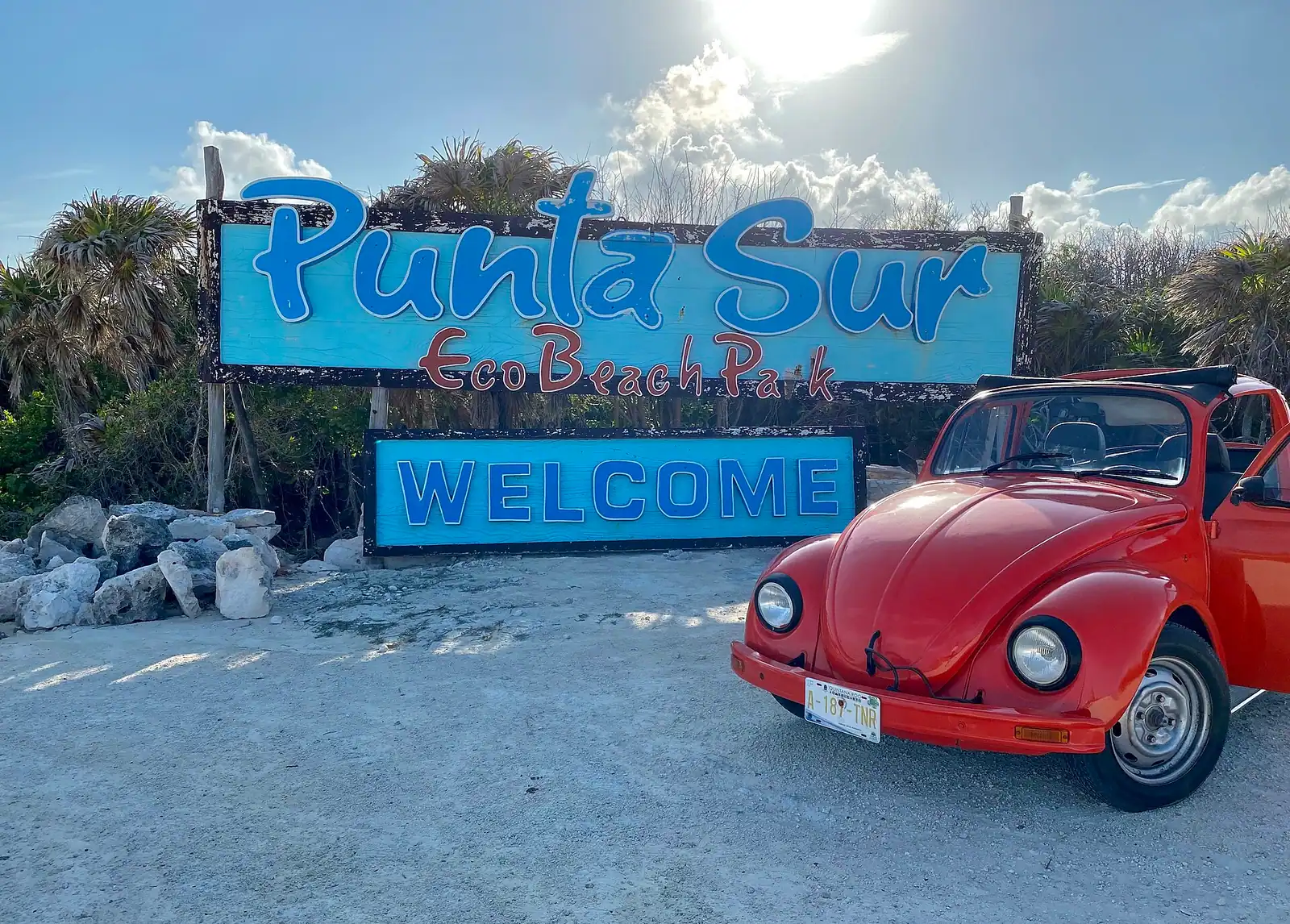
    Punta Sur Eco Beach Park

    A thousand hectares on Cozumel's southern tip that you drive through rather than walk, ending at a lighthouse and a crocodile lagoon.

    2–5 hoursPaid park, charged per person at the gate, with a reduced rate for children. Your vehicle then drives the internal road at no extra charge.1.1 mi away

El Cielo: common questions

Can you pick up the starfish at El Cielo?

No, and doing it kills them. Sea stars take oxygen from water through thin skin structures and tube feet that collapse in air, drawing in bubbles the animal cannot expel. The damage is internal and invisible, so a starfish held up for one photograph can look fine and die days later. Cozumel guides brief against it, the park has policed it and boats have been fined. Photograph them on the bottom instead.

How do you get to El Cielo in Cozumel?

Only by boat. El Cielo is a sand flat off the island's southwestern tip with no road, dock or shore access whatsoever. Most people arrive on a three-stop southern snorkel run that also visits shallow Palancar and Columbia Shallows, departing from San Miguel, the west-coast hotel piers or a southern beach-club dock. Smaller pangas and private boats cost more but give you far longer in the water.

How deep is the water at El Cielo?

Shallow enough to stand in across much of it, roughly waist-deep to around a dozen feet depending on where the boat stops and on the tide. That is what makes it work for non-swimmers and nervous snorkellers. It also means there is no coral structure to look at, so treat it as a wading and wildlife stop rather than a reef, and take the reef snorkelling at the earlier stops on the run.

Is El Cielo worth it on a cruise day?

Yes, if you take the morning departure. The sandbar is at the far southern end of the island, so a three-stop snorkel run runs four to five hours door to door with transfers, which fits a six-to-eight-hour call with slack. Book with an operator that works to ship schedules, give them your ship's name, and remember Cozumel stays on UTC-5 year-round — an hour behind US Eastern from March to November.

What is the best time of day to visit El Cielo?

Early morning on a low-wind day. Wind is the variable that matters, not rain: any chop working around the island's southwestern tip lifts fine sand and turns the flat from glass to milk. Morning boats also beat the catamaran crowd. Sundays are the local boating day, which makes for good atmosphere and a busy anchorage, so weekdays are calmer if you want the animals to yourself.