Divers arrive in Cozumel having been told the diving is easy, and it is, in one specific sense: you are not going to be finning into current on a mooring line. The Yucatán Current runs up the leeward wall from south to north, the boat drops you upstream, and the reef comes to you. Nobody swims a site here.
What that does not mean is that every site suits every diver. Cozumel's reefs run from thirty feet of coral garden to a vertical wall that falls past the range of any recreational certification, and the current that makes the shallow dives effortless is the same current that makes Punta Sur's corner a place where a diver with fifteen logged dives has no business being. The skill being tested on this island is buoyancy and composure, not fitness, and shops can only match you to a site if you tell them the truth about your logbook.
The sites, south to north
Boats work upcurrent, so a two-tank day generally runs south first and shallower second.
Advanced ground: the southern tip
Punta Sur Reef is the island's most demanding regular site. Deep coral buttresses, swim-throughs, and Devil's Throat — a near-vertical chimney that drops from around ninety feet and exits into open blue well past a hundred and twenty. It is dark, it is narrow, it requires a light and a guide who knows the exits, and shops properly refuse divers who are not deep-certified and current. Nobody should do it on their first dive of a trip.
Maracaibo, further out at the southern end, is a deep wall with strong current and an unpredictable exit. It is an expedition dive that most shops run only when conditions and the group justify it.
Barracuda and San Juan, at the far north, are the mirror image: deep, fast, exposed, and often cancelled. These are the sites where eagle rays gather in the coldest months, and the price of that is water that can move at a genuinely uncomfortable pace.
The middle: the walls everyone comes for
Santa Rosa Wall is the classic. The reef top sits around fifty to sixty feet and then simply stops, and you fly along a vertical face hung with barrel sponges and gorgonians, ducking through tunnels and coming back out over blue. Current here is usually brisk. It is an intermediate dive with a genuine wall profile and it deserves respect.
Palancar is four dives, not one. Gardens is the gentlest, a field of coral heads in forty to sixty feet with sand chutes between them. Horseshoe is the photograph everyone has seen, a curve of huge coral formations around a sand bowl. Caves and Bricks add swim-throughs and more relief. A week in Cozumel can spend three of its dives inside Palancar and not repeat itself.
Columbia Deep, just south of Palancar, is the cathedral one: enormous coral pinnacles rising forty or fifty feet off the bottom with canyons between them, generally dived in the eighty-to-a-hundred-foot range. Columbia Shallows, next door, is a different and far gentler site that snorkel boats also use.
The shallow reefs near town
Paradise Reef runs parallel to shore near the International Pier in around thirty to forty-five feet. It is an easy dive, an excellent second tank, the standard night dive, and the best place on the island to find a splendid toadfish — a black-and-yellow-striped fish with electric blue lines along its head that lives under ledges and is found nowhere on earth except Cozumel.
Chankanaab Reef, Villa Blanca, Tormentos and Yucab fill out the shallow end. Yucab in particular gets a surprisingly fast current for its depth, which is what makes it a good place to practise flying.
| Site | Typical depth band | Suits | Note |
|---|---|---|---|
| Paradise Reef | 30–45 ft | New divers, night dives | Toadfish under the ledges |
| Chankanaab Reef | 30–50 ft | New divers | Sheltered, easy entry |
| Yucab | 40–60 ft | New divers with good trim | Faster current than the depth suggests |
| Palancar Gardens | 40–60 ft | Most certified divers | The friendliest of the four Palancars |
| Palancar Horseshoe | 50–80 ft | Intermediate | The classic photograph |
| Santa Rosa Wall | 50–100+ ft | Intermediate, comfortable on walls | Brisk current, tunnels |
| Columbia Deep | 80–100 ft | Intermediate to advanced | Pinnacles and canyons |
| Punta Sur / Devil's Throat | 90–130+ ft | Advanced, deep-certified only | Light required, guided, not day one |
Shaping a dive week
The default here is a two-tank morning: boats leave between about 7:30 and 8:30, run twenty to forty-five minutes south, dive deep first and shallow second, and are back at the dock in the early afternoon. Afternoon single tanks work the reefs near town. That leaves the evening free, which is where the night dive fits.
A sensible five-day shape looks like this. Day one: two shallow-to-middle dives to get your weighting right and let the shop see you in the water. Days two and three: the walls, Santa Rosa and Palancar, with Columbia if the boat is going that far. Day four: the deep southern sites if you are qualified for them, or a second Palancar day if you are not, plus a night dive. Day five: shallow reefs only, and stop there.
That last line is a rule, not a preference. Leave at least eighteen hours between your final dive and going to altitude, which on a normal schedule means no diving at all on your departure day and often none the afternoon before. Divers who ignore it are gambling with something that does not negotiate.
Nitrox is worth having here more than in most places, because the profile is repetitive, multi-day and deep-first. Most Cozumel shops fill it and many include it in packages.
Cruise-day diving, honestly
A two-tank morning takes five and a half to six hours door to door. On an eight-hour call that works with a real margin. On a six-hour call it does not, unless the boat is in the water by 7:30, and the risk is not the diving — it is an operator who does not know your all-aboard time. Give the shop your ship name and all-aboard in writing, take the first departure of the day, and confirm what time the boat is back at the dock rather than what time the trip finishes. A single-tank afternoon dive is the low-stress version and fits almost any call.
What the park expects
Arrecifes de Cozumel is a national marine park and the rules are enforced. Gloves are generally prohibited. Touching, holding or standing on coral is prohibited outright. The marine park fee is a per-person daily charge collected as a dated wristband, set in pesos, raised more than once in recent years — budget somewhere in the region of ten to fifteen US dollars a day and confirm the current figure when you book, because plenty of shops collect it in cash at the dock rather than folding it into the package price.
Carry a surface marker buoy. On a drift island with no descent line and no mooring, it is the piece of kit that makes you findable, and most shops now insist on it.
How to pick a dive shop here
Cozumel has one of the deepest and most competitive dive fleets in the Caribbean, which is good news and also means the differences between operators are real.
Ask about group size, and get a number rather than an adjective. Six to eight divers per guide is a different dive from sixteen, particularly on a wall where the guide is watching depths.
Ask about the boat. Fast boats reach Punta Sur and Maracaibo comfortably; slower boats spend your bottom time getting there and back and will tend to stay closer to town. Ask about shade, a head on board, and how you get back aboard, because most Cozumel boats board off a ladder in open water.
Ask whether the marine park fee and equipment are included, item by item. The cheapest advertised two-tank price on the island usually excludes both, and the gap closes fast.
Ask how they handle separation. The right answer is a briefed protocol — a minute of looking, then a slow ascent, a safety stop and the boat comes to you — not a shrug.
And tell them your real logged dive count and when you last dived. A good Cozumel shop will happily put a rusty diver on Palancar Gardens and refuse them Devil's Throat, and that refusal is the thing you are paying for.
What actually lives on this reef
Cozumel is a coral and structure dive rather than a big-animal dive, and expecting sharks is the fastest route to disappointment.
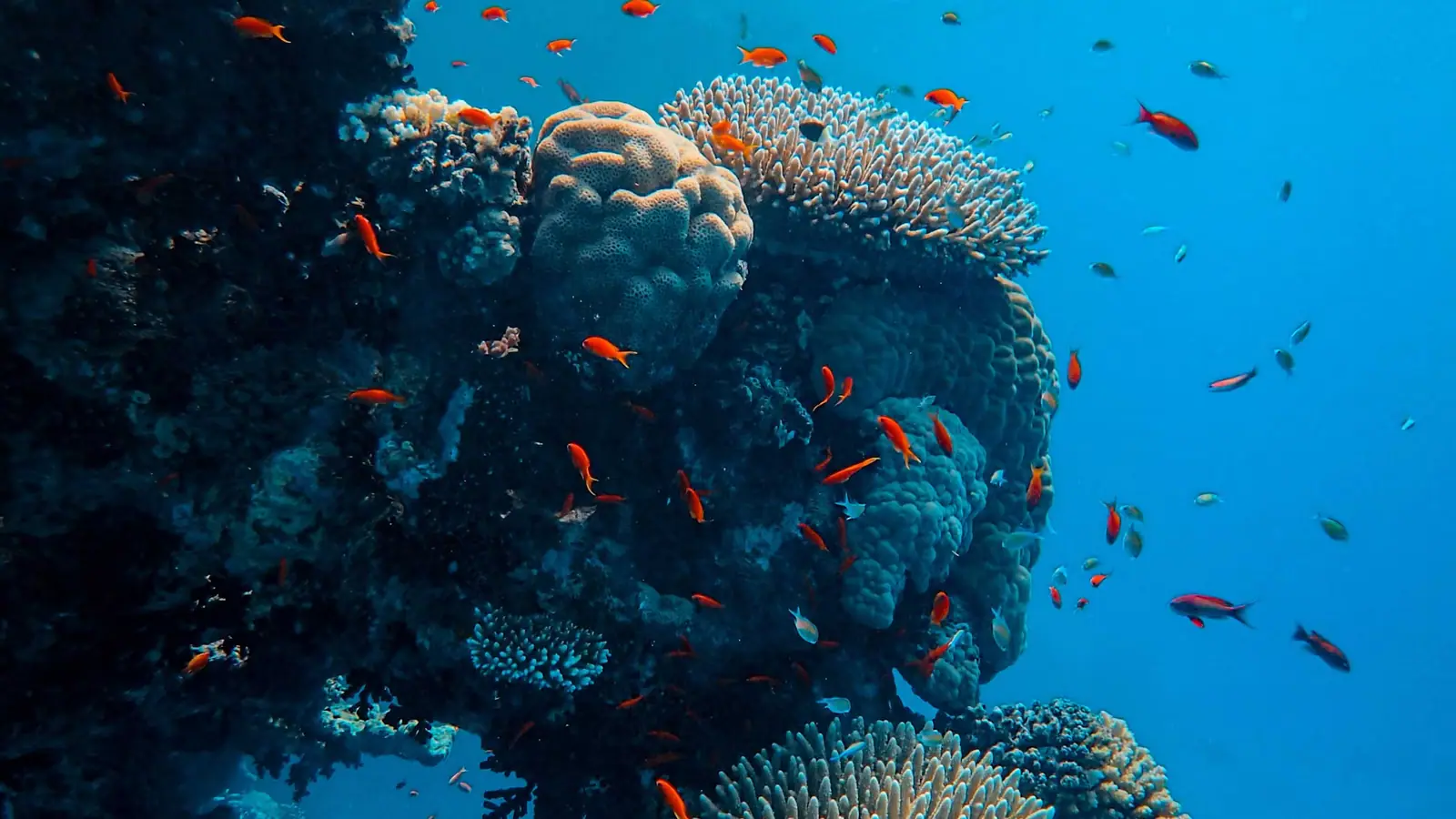
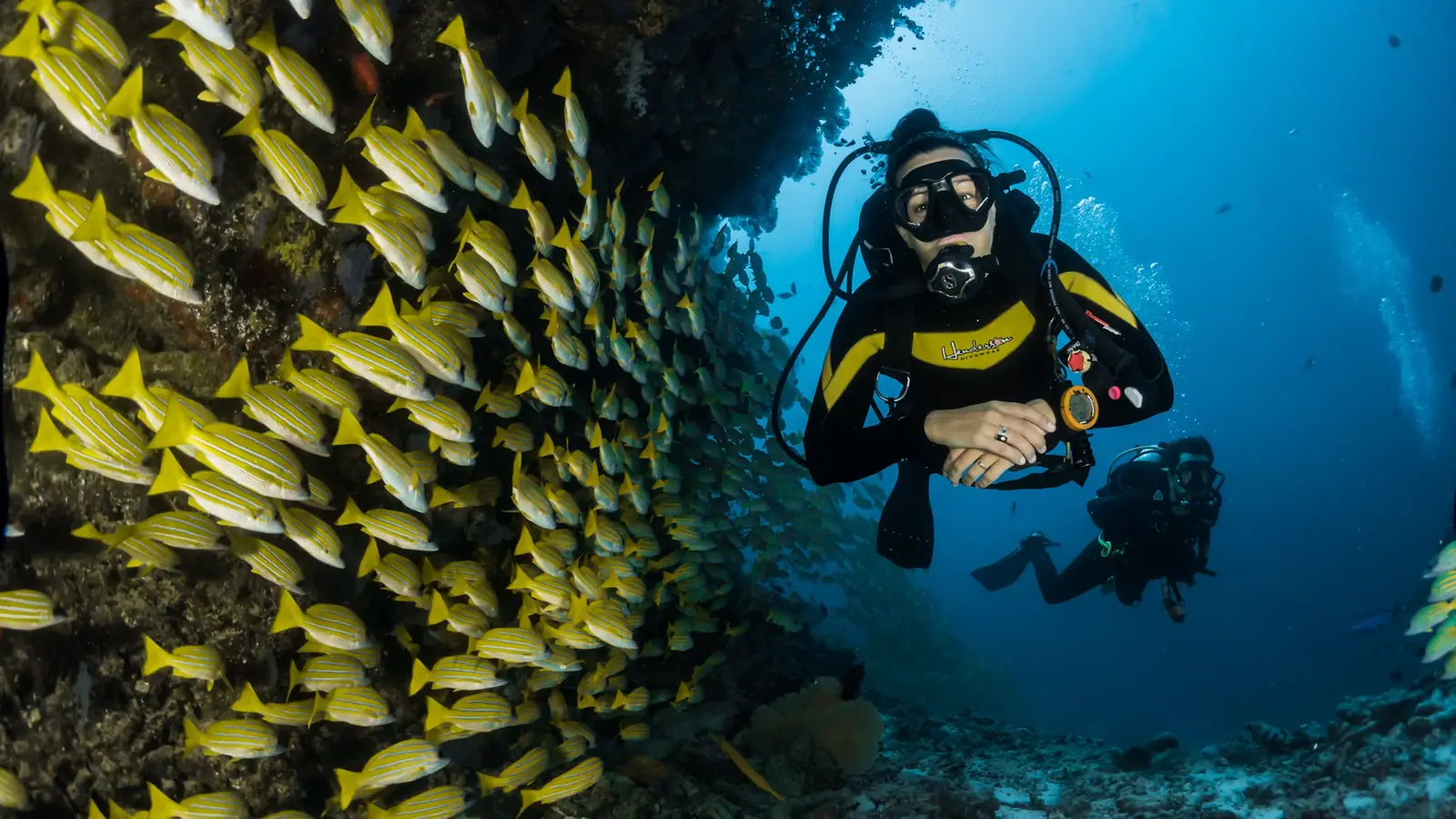
What you will see, reliably: hawksbill and green turtles, green and spotted moray, nurse sharks asleep under coral plates, black grouper, enormous barrel sponges, sea fans bent in the current, and schooling grunts and snapper stacked in the lee of the coral heads.
What you will see if you look properly: the splendid toadfish, which exists here and nowhere else, tucked under a ledge with only its striped face showing. Flamingo tongue snails on the gorgonians. Banded coral shrimp and cleaning stations. Juvenile fish in the shallow rubble at Paradise Reef.
Seasonal: eagle rays gather in the colder months, typically around the deeper northern and southern sites, and they are the reason experienced divers book January and February. Splendid toadfish are easier to find at night. Whale sharks do not come to Cozumel — that is the mainland, off Isla Mujeres and Holbox, in summer, and it is a separate day trip rather than a dive.
What you will not see, and should not want to: anyone feeding anything. Fish feeding is not part of the culture on this island and a guide doing it is telling you something about the operation.
Last updated
Opening hours, ordinances and prices move with the season. We re-check this guide rather than rewrite it, and the date above is the last time someone did. How we research and correct.