Skip to content
Search
Menu

These go through Viator and earn us a commission. You pay the same as booking direct, and the commission did not choose the list.

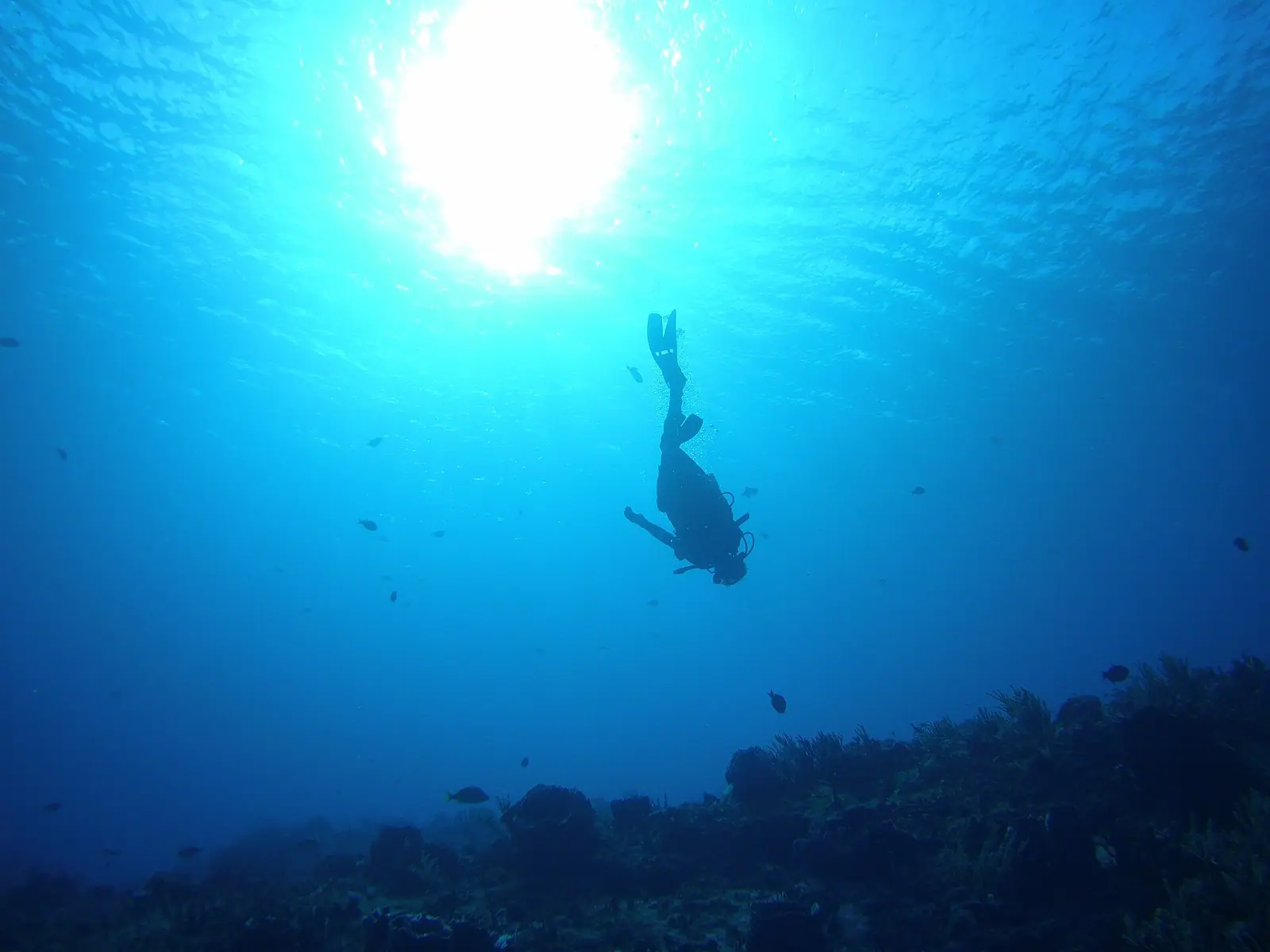
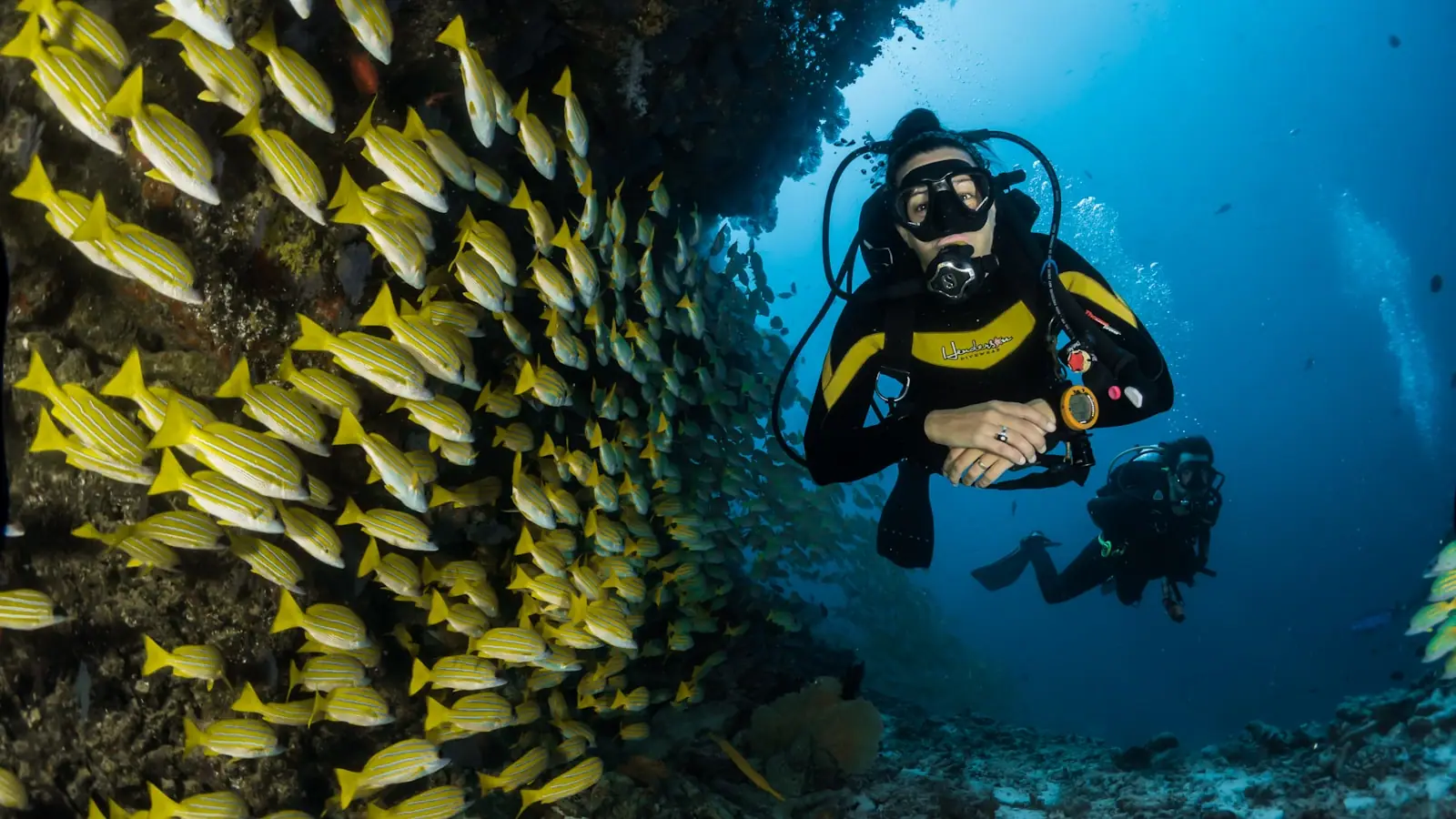
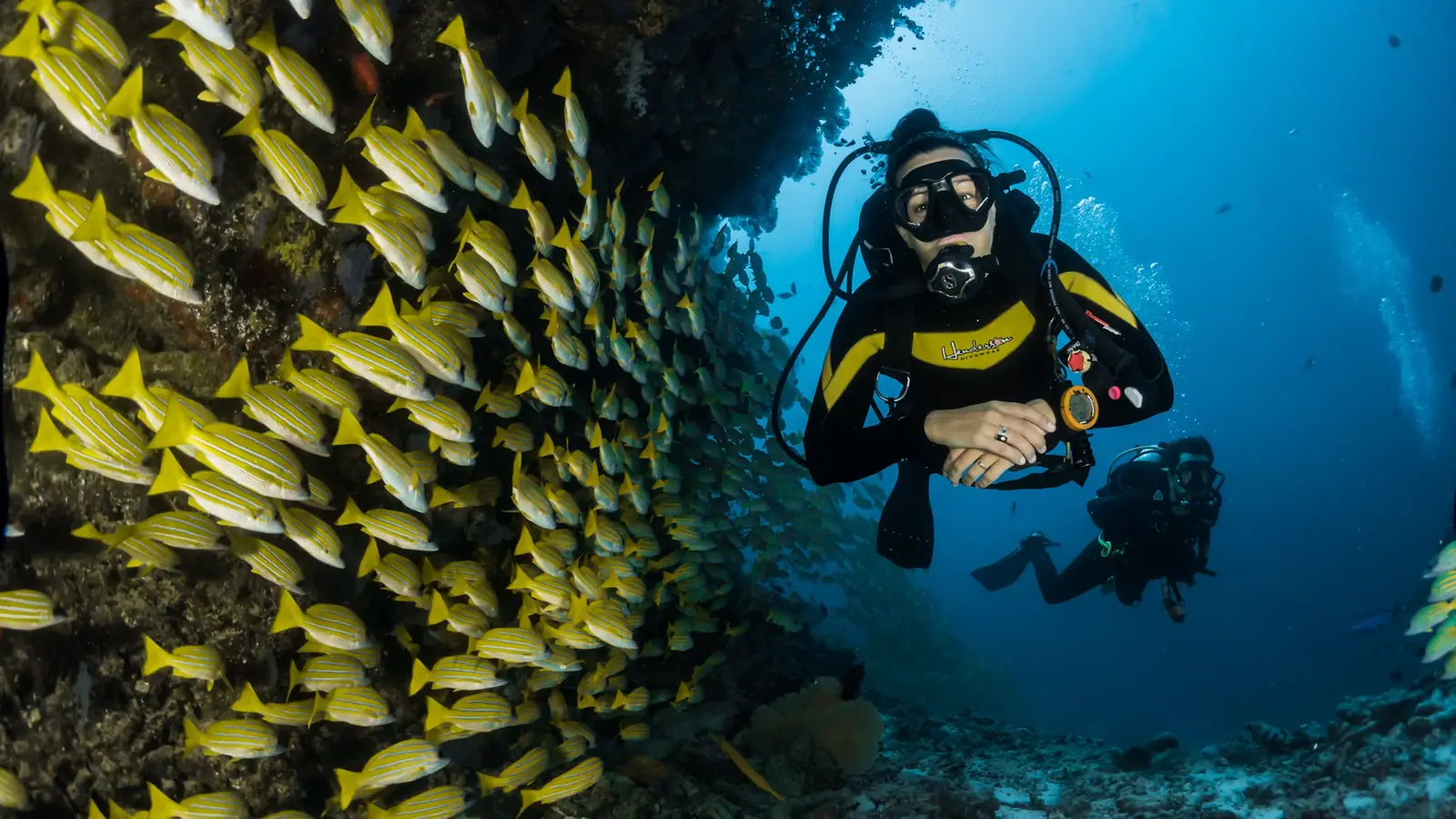
A diver hanging beside a vertical coral wall that drops away into deep blue water
巫迪文

Water feature

Santa Rosa Wall

Last updated

The reef crest sits at about fifty feet and then simply stops, and everything below it is blue for as far as your light goes.

Santa Rosa is the site people are describing when they say Cozumel has a wall. Palancar has drop-offs; Columbia has towers. Santa Rosa has a face. The reef crest runs at something like fifty feet, and past its edge the rock falls away vertically into water far deeper than anyone is going to dive, so the whole experience is flying along a cliff with nothing underneath you.

The dived range is usually somewhere between sixty and a hundred and ten feet, and the dive is short by design. What you get for the depth is structure: the northern end of the wall is the sheerest, and in places tunnels and swim-throughs cut right through the reef crest so you enter on the shallow side and come out over the drop with the blue opening in front of you. Overhangs are hung with enormous barrel sponges and rope sponges, and the undercut sections shelter green morays, black grouper and the resident turtles that Cozumel divers stop photographing after about day three.

The current here is the strongest of the commonly dived southern sites, and it is why the site is good. It runs north along the wall, it delivers the food that built those sponges, and it means you cover a lot of reef in a short dive without kicking. It also means there is no going back. If you drift past something, it is gone. Divers who have only dived from anchored boats find this the hardest adjustment in Cozumel, and Santa Rosa is the least forgiving place to make it.

Operators vary on the certification they want. Some will take Open Water divers with a recent history; most want Advanced, and nitrox is standard for anyone diving here twice in a day. The honest test is not the card. It is whether you can hold a depth without thinking about it, because on a vertical face there is no bottom to tell you that you are sinking.

Santa Rosa sits inside Arrecifes de Cozumel National Park: per-person daily park fee, gloves generally prohibited, no contact with the coral. There is no snorkelling here. The top of the reef is too deep and the current too strong.

Getting there and parking

Boat access only, on the southwestern shelf north of Palancar. There is no shore entry and no land access of any kind.

It is the shortest run of the three big southern walls: roughly fifteen to twenty minutes from the San Miguel dive docks, less from the west-coast hotel piers. That is why it is the usual first tank of a two-tank morning rather than a dedicated trip.

Cruise passengers land at Punta Langosta in town or at the International and Puerta Maya piers about three miles south. Either way, a fixed-fare taxi or an operator transfer gets you to the dock. Agree the taxi fare before you get in; Cozumel taxis work on posted zone rates with no meters.

What the wall is, and where it is best

The wall is not uniform along its length, and where your boat drops you changes the dive.

The northern section is the vertical one. The face is close to sheer, the crest is undercut, and this is where the through-tunnels are: short passages cut clean through the reef top, entered from the shallow inshore side and exiting over open water. They are not overhead environments in any technical sense — you can see daylight at both ends — but they are narrow enough that a diver with loose gear or unsettled buoyancy will touch something, and touching is exactly what is not allowed.

Further south the profile softens into a steep slope with big coral buttresses and sand chutes running down it. Less dramatic, more to look at in detail, and easier to manage a group on.

Across both, the signature is scale. The sponges on the overhangs are the largest on the island: barrel sponges you could climb into and rope sponges hanging several feet clear of the rock. Look out into the blue as often as you look at the wall, because the pelagic traffic — eagle rays, big jacks, the occasional shark — passes off the face rather than on it.

The current, and what it asks of you

Santa Rosa reliably runs the strongest current of the standard southern sites, and the dive is built around that rather than in spite of it.

  • The entry is quick. Expect a negative or fast descent so the group assembles below the surface instead of scattering on top.
  • You will not swim the wall. You will be flown along it. Fins are for steering and for staying off the rock, not for making progress.
  • There is no backtracking. Decide fast or let it go.
  • Watch your depth constantly. A vertical face gives you no bottom cue, high visibility makes everything look nearer, and a slow unnoticed descent is the classic Cozumel wall mistake.
  • Carry and know how to deploy an SMB. The boat is following bubbles across a lot of water.
  • Consider nitrox. It buys bottom time at the depths this site is actually dived at, and it is widely available on the island.
  • Do not make this your first dive in two years. Ask for Palancar Gardens or Paradise as a check dive and put Santa Rosa on day two.

Downcurrents are occasionally reported along Cozumel walls. If you feel yourself being pushed down, move away from the face into open water and add gas gradually rather than finning hard.

Who should book this and who should not

Book it if you are comfortable at eighty to ninety feet, have your buoyancy sorted, have dived in current before, and want the single most dramatic profile on the island. Also book it if you are a photographer: the combination of a vertical face, high visibility and pelagic traffic off the wall is hard to find elsewhere in the Caribbean at this ease of access.

Do not book it if you were certified last week, if it has been years since your last dive, if you are diving on a cruise call with no slack in your schedule, or if you are hoping to snorkel. There is nothing here for a snorkeller — the reef top is too deep to see properly and the current is too strong to hold position over.

Some operators take Open Water divers to Santa Rosa and dive it conservatively along the shallower southern profile. That is a legitimate way to see the site, but be clear when booking which version you are getting. A shop that asks about your recent dive history before selling you this site is doing its job, not being difficult.

And the standard Cozumel rule applies with more force here than on a shallow reef: leave a proper interval between your last dive and your flight home, and do not book a deep wall for the morning you travel.
Boat times, cruise days and the seasonal catch

Santa Rosa is the closest of the three big southern walls to town, roughly a fifteen to twenty minute run from the San Miguel docks and less from the west-coast hotel piers. That makes it the standard first tank on a two-tank morning, usually paired with something shallower afterwards — Paradise, Chankanaab Reef or Palancar Gardens — which is correct dive planning as well as convenient.

For overnight visitors, that proximity is what makes Santa Rosa easy to repeat. Divers staying a week often do it twice and get two different dives out of it depending on where the current puts them.

For cruise passengers, Santa Rosa is more realistic than Columbia or the deeper Palancar sections precisely because the boat ride is short. A two-tank morning from a town-side dock can fit inside a typical call with room to spare, but the maths only works if you book with an operator that plans around ship schedules and you tell them your all-aboard time in ship's time. Cozumel keeps UTC-5 all year, so from March to November the island clock is an hour behind US Eastern.

In winter, a norte can close the small-boat fleet for a day or two at a time. Santa Rosa is sheltered enough to come back sooner than the far southern sites, but it is still an argument against saving your best dive for the last morning.

Tours that visit Santa Rosa

Operators run these trips past Santa Rosa, or stop there as part of a longer route. We list what the booking data supports — not everything that mentions the name.

These go through Viator and earn us a commission. You pay the same as booking direct, and the commission did not choose the list.

Shared departurespriced per seat, best value for one or two

Private and small-group optionsoften cheaper per head for a family or a group of six

  • El Ausente at El Cielo
    Free cancellationPrivate tour

    Low Last Minute Supplier Cancellation Rate

    Exclusive Private Boat to El Cielo (opens in a new tab)

    70 reviews

    Indulge in the exclusivity of a Private Boat tour to Cozumel’s most breathtaking destinations: El Cielo and the world-famous coral reefs…

    4 hours

    Prices checked

    from $419.99
  • Mr Sanchos Romantic Day Beach Pass for Two
    Free cancellationSmall group

    Short term availability

    Mr Sanchos Romantic Day Beach Pass for Two (opens in a new tab)

    455 reviews

    Already married? We have just what you need. Just friends? You can join along too. Come and enjoy. This pass includes the All Inclusive…

    1 hour

    Prices checked

    from $295

Near Santa Rosa

Straight-line distances, so allow more on the road — the island is long and has one main parkway.

  • A diver drifting along the face of a coral wall in very clear blue water, the reef dropping away below

    Water feature

    Palancar Reef

    Three and a half miles of coral wall off Cozumel's southwest shelf, sold as one name and dived as four very different sites.

    4–6 hoursNot free in practice: you need a boat, and everyone entering the national park by boat pays a per-person daily park fee on top of the trip.2.5 mi away

  • Tall coral formations rising from a white sand seabed in very clear blue water

    Water feature

    Columbia Reef

    Cozumel's southernmost big reef, and the one place where the same name sells a 90-foot pinnacle dive and a waist-deep snorkel stop.

    4–7 hoursNot free in practice: reachable only by boat, and every person entering the national park by boat pays a per-person daily park fee on top of the trip price.4.7 mi away

  • A low coral ridge with sponges and sea fans in shallow, brightly lit water

    Water feature

    Paradise Reef

    Thirty to fifty feet of easy reef a few minutes south of the cruise piers, and the best night dive on the island.

    2–4 hoursNot free in practice: boat access, plus the per-person daily national park fee charged to everyone entering the park by boat.7.1 mi away

  • Snorkellers above a shallow coral shelf close to a rocky shoreline in clear water

    Park

    Chankanaab Park

    The one Cozumel gate that buys reef you can swim to from the sand, a lagoon, a garden and a beach, ten minutes from the piers.

    3–7 hoursPaid park, charged per person at the gate with a lower child rate. All-inclusive food and drink packages and the animal programmes are priced separately on top.4.6 mi away

Santa Rosa: common questions

How deep is Santa Rosa Wall?

The reef crest sits at around fifty feet and the face drops vertically far past recreational limits, so the meaningful number is the range operators actually dive: roughly sixty to a hundred and ten feet. Dives here are short because of that depth, and nitrox is common among divers doing more than one Cozumel dive a day. There is no bottom to level off on, which is exactly why depth discipline matters on this site.

Can beginners dive Santa Rosa Wall?

Some operators will take Open Water divers with a recent dive history and run a conservative profile along the shallower southern end. Most want Advanced certification, and all want comfort with drift. The real qualification is not the card but whether you can hold depth without thinking about it, because a vertical face gives no bottom reference and very clear water makes everything look closer. Dive Paradise or Palancar Gardens first.

Can you snorkel at Santa Rosa Wall?

No. The top of the reef sits too deep to see in any detail from the surface, and the current here is the strongest of the commonly dived southern sites. Snorkel boats do not stop at Santa Rosa. If you want shallow water on the same stretch of coast, ask for Columbia Shallows, the shelf above Palancar Gardens, or the sandbar at El Cielo.

Why is the current so strong at Santa Rosa Wall?

The same north-setting flow that runs the length of Cozumel's leeward reef accelerates along a vertical face, and Santa Rosa is the most vertical face on the island. That current is also why the site is worth diving: it feeds the enormous sponges on the overhangs and brings pelagic traffic past the wall. Practically, it means a fast entry, no swimming back, and an SMB on the surface.